Hey guys, if you’ve ever booked a concert, a corporate conference, or a local festival lately, there’s a good chance you’ve stared at a crisp, bright LED screen playing visuals, speaker notes, or artist merch drops. As someone who’s spent the last 7 years in the rental LED display game—helping event planners, production companies, and even small business owners get the right screens without blowing their budget—one question I get literally every single week is: “How much does this actually cost to rent and install?” Rental LED Display
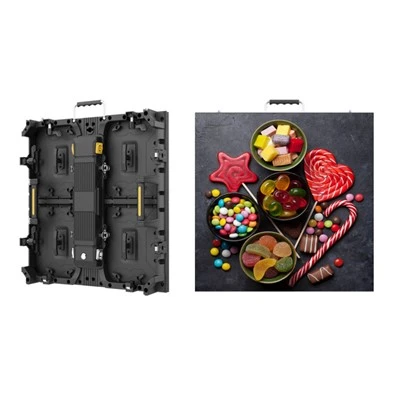
I get it. Nobody wants a last-minute surprise bill mid-event, right? Whether you’re a small brand throwing a pop-up product launch, a production company planning a 10-city tour, or a non-profit hosting a big community rally, rental LED isn’t just “a screen”—it’s a system, and breaking down the costs isn’t as simple as looking at a flat price online. Let’s walk through exactly what goes into that number, how I price projects for clients, and how you can avoid the common traps that make people overspend on rental LED.
First, let’s get one thing straight: there’s no one-size-fits-all number here. A tiny 2×3 screen for a 50-person workshop is way different than a 30×15 main stage for a 50,000-person music festival. But if I had to ballpark the baseline for most projects? You’re looking at $1,500 to $10,000 per week of rental, not including installation, and that’s just for the screen itself. Wait, hold on—don’t zone out yet. Let’s break that down, because those numbers shift hard based on what you actually need.
The Big Three Factors That Are Killing (or Saving) Your LED Cost
Let’s start with the stuff that actually impacts price, not the random add-ons no one tells you about.
First up: screen resolution. This is non-negotiable, and it’s tied directly to how far your audience is sitting. If you’ve ever been to a concert and stared at a big screen that looked blurry from the back, that’s because someone cut corners on resolution. For rental LED, we measure resolution in pixel pitch—smaller pixel pitch = sharper screen, and way pricier.
Here’s the thing I always explain to clients: if your audience is within 15 feet of the screen, you don’t need a 1.9mm pixel pitch (that’s super sharp, for close-ups). A 2.6mm or 3.9mm screen will look just as good, and it’s $300–$500 cheaper per week. But if you have a 50,000-person festival where people are 50+ feet away? A 5mm or 6mm screen might be fine, saving you even more. I had a client last year who booked a 1.9mm screen for a 200-person corporate dinner, thinking it’d be “higher quality”—they ended up overpaying $800 for no reason, because no one was close enough to tell the difference. That’s the kind of mistake I help people avoid all the time.
Second factor: screen size and configuration. This is obvious, but it’s not just length x width. Do you need a single flat screen, or a curved one? Do you need custom cutouts for stage lights, a DJ booth, or a brand logo? Curved screens are more complex to manufacture and transport, so they add 20–30% to the rental cost. Custom cuts? Another 15% minimum. And if you’re doing a multi-screen setup—like a main stage, side screens, and a rear screen for performers to see themselves—each extra screen adds its own rental fee, plus cabling and framing. Last quarter, I worked on a tour that needed 4 separate screens (main stage, two side screens, and a back drop) and that pushed the total screen cost up from $2,000 to $7,500 for a 3-week run.
Third, and this is the part most people forget: installation and labor. This is not “you unbox it and plug it in” stuff. Rental LED is heavy, fragile, and needs to be mounted safely—especially if it’s 20+ feet high. Our team does all the rigging, right? Rigging is the metal structure that holds the screen up, and that depends entirely on your venue. A flat floor with a truss system built into the ceiling is way easier than a field for an outdoor festival, where we have to build ground support structures.
Labor costs vary a ton too: a 4-hour setup for a small indoor event is $500–$1,000, while a 12-hour setup for a big outdoor festival is $3,000–$5,000. And don’t forget teardown! That’s another separate cost, usually equal to setup. I once had a client try to cut corners by having their intern help with rigging—they cracked a screen panel, and ended up paying $2,000 for repairs. Way more than the labor we would’ve charged. Installation is not something to cheap out on, trust me.
Wait, and what about the extra stuff that gets added to the bill? Let’s call these “hidden add-ons” that trip people up. Power is a big one—outdoor events or venues with bad power need generators, which add $1,000–$3,000 for a weekend. Content playback? If you need someone to run the screen, play videos, sync with live feeds, that’s another $200–$500 per day. Insurance and damage waivers? We always offer a waiver that covers accidental chips or cracks, because rental panels are pricey (a single 1×1 panel can be $1,000+), and that’s $150–$300 for a standard event. Oh, and shipping! If you’re renting from out of town or needing the screen delivered to multiple venues, that’s another $500–$2,000, depending on distance.
Short-Term vs. Long-Term Rental: Which Saves You Money?
Here’s another question I get all the time: is it cheaper to rent for a weekend or a full week? Usually, longer rentals are a better deal, but only if you’re using the screen for most of that time. We do weekly rates that are 10–20% cheaper than daily rates. So if you need a screen for 5 days, a weekly rate of $1,800 is better than 5 daily rates at $500 each (that’d be $2,500 total). But if you’re only using it for 1 day, don’t force a weekly rate just to get a discount—you’ll end up paying for days you don’t need.
Also, last minute vs. booked in advance. If you wait till 2 days before your event, you might have to pay a premium—like 25% extra for emergency rentals. We had a small bakery book a screen for their grand opening last minute, and they had to pay an extra $700 because all our local inventory was taken for a wedding that weekend. Pro tip: book at least 4–6 weeks out, not just for better pricing, but to get the exact screen you want, not whatever’s left.
Common Mistakes That Make People Overpay
Let’s talk about the dumb stuff people do that adds hundreds or thousands to their bill. First, getting a screen that’s too good for their audience. Like that corporate dinner client I mentioned earlier—shoutout to them, they still book with me, but they learned. If your audience is 10 feet away, a higher resolution isn’t worth the extra cost. Second, not asking about damage fees. Some rental companies charge you full price for a single tiny crack that’s just a cosmetic issue. We charge for repairs only if the crack impacts the screen’s performance, not a minor chip in the frame. Third, not clarifying what’s included. Some companies advertise a $1,000 screen rental, but that doesn’t include rigging, labor, or shipping—so by the end, you’re paying $2,500 total. Always ask for a full, line-item quote so there are no surprises.
What’s the Real Breakdown for a Typical Project?
Let’s put this all together with an example. Let’s say you’re throwing a 1,000-person outdoor brand launch in a city park, needs a main screen, plus a smaller side screen for live feeds, and a DJ booth that needs to sit below the main screen. Here’s what that might look like for us:
- 2.6mm main screen (20×12 feet) + 3.9mm side screen (10×8 feet) + custom cutout for DJ area: $2,800 for a 3-day rental
- Rigging for main screen (truss, ground supports for the park), plus rigging for side screen: $1,200
- Setup and teardown labor (8 total hours for 2 techs): $1,000
- Generator for outdoor power: $800
- Content operator for the day: $300
- Damage waiver: $150
Total: $6,250 for 3 days. That’s a pretty typical number for that size event. If you tried to go cheaper? Maybe go with a 3.9mm main screen, cut the side screen, skip the generator by using venue power, and that would drop you to around $3,800 total. That’s the flexibility rental gives you, as long as you know what to adjust.
Final Pro Tips to Keep Costs Down
Before I wrap this up, here are my go-to tips for anyone renting LED:
- Know your audience distance: Figure out how far the farthest guest will be from the screen, and pick the lowest resolution that looks sharp at that distance. No need to overspend on something no one will notice.
- Book early: 4–6 weeks out = better prices, better screen selection, no emergency fees.
- Ask for a full line-item quote: Make sure every single cost (rental, rigging, labor, shipping, anything) is listed, so there are no “surprise” charges later.
- Don’t skip the damage waiver: It’s way cheaper than paying for a broken panel if something goes wrong (and something always goes wrong, even if it’s just a barista knocking over a mic).
- Skip the add-ons you don’t need: Do you really need a custom curved screen? Or can a flat one work? Do you need a dedicated operator, or can one of your team members run the screen if we train them?
At the end of the day, rental LED isn’t a one-size-fits-all price, but it also doesn’t have to be a mystery. The goal is to get a screen that works for your event, your audience, and your budget—no overpaying for features you don’t need, no hidden fees, no stress.

If you’re planning an event, need a quote, or just have questions about what screen size or resolution makes sense for your gig, hit me up. I’m happy to walk through your project, give you a clear, no-surprise price, and make sure your LED setup looks as good as your event should. Let’s make your next event stand out without breaking the bank.
References
Indoor Fixed LED Display Rental LED Display Association. (2023). Cost Benchmarks for Temporary LED Installations. Event Tech Report. Production Weekly. (2024). Vendor Pricing Trends for Audio/Visual Rental Services. Venue Safety Alliance. (2023). Rigging and Labor Standards for Temporary LED Screens.
Shenzhen TrueColor LED Co., Ltd.
As one of the most professional rental LED display manufacturers in China, we also support customized service. We warmly welcome you to wholesale durable rental LED display for sale here from our factory. If you have any enquiry about cooperation, please feel free to email us.
Address: 3/F, Bldg A9, 10 Longyi Rd, Fuyong Sub-dist, Bao’an Dist, Shenzhen
E-mail: sales@truecolor-led.com
WebSite: https://www.truecolor-led.com/
