Hey everyone, thanks for stopping by. I’m gonna cut to the chase—if you work with Motor Control Centers (MCCs), you know that keeping ‘em cool isn’t just a nice-to-have, it’s make-or-break. I’ve been selling MCCs for over 10 years now, and I’ve seen too many clients skip thermal protection steps only to end up with fried drives, tripped breakers, or even total system shutdowns. Today, I’m breaking down the actual thermal protection mechanisms we build into every MCC we ship, no overcomplicated jargon, just the real stuff that keeps your operations running smooth. Motor Control Center
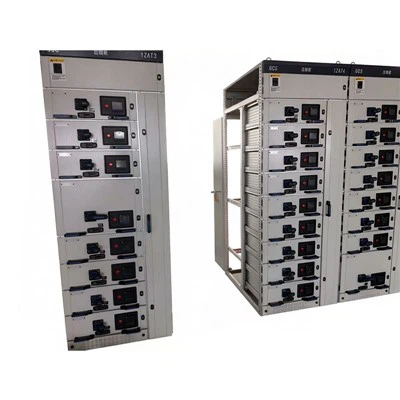
First, let’s get on the same page: an MCC is that big metal cabinet stuffed with all the gear that runs your motors—think conveyor belts, pumps, HVAC fans, whatever. All those components (contactors, VFDs, overload relays) generate heat when they work, and if that heat builds up, you’re in trouble. Heat is the #1 killer of electrical components, right? It cuts the lifespan of semiconductors like VFDs by half every 18°F over their rated temp—stats don’t lie. So our thermal protection isn’t an afterthought; it’s baked into the design from day one.
Let’s start with the basics we build into every unit: passive ventilation and enclosure design. I know, I know—passive sounds boring, but it works if you do it right. We don’t just drill random holes in the cabinet. We use NEMA-rated enclosures that are designed with specific louvers and ventilation paths—top vents for hot air to escape (heat rises, duh) and bottom intakes for cool ambient air. But here’s the trick we learned over years: we leave dedicated empty lanes inside the MCC, not cramming every inch with components. That airflow isn’t just for show—we size those lanes based on the number of slots and the load each slot’s carrying. If a client has a 10-slot MCC running max load on 8 slots, we adjust the vent size so there’s still enough air moving through, no hot spots stuck between two big VFDs. We also add internal metal baffles to direct air past the hottest parts first—like the bus bars (those big copper strips that carry power) and the VFD heat sinks—instead of letting it just circulate around the edges. Trust me, we’ve fixed so many issues for clients who bought cheap MCCs where the bus bars overheated because airflow was blocked.
Next up: active thermal control, and this is where we stand out. Not all MCCs need fancy HVAC, but for high-load applications—like a mining operation with big conveyors running 24/7, or a water treatment plant with multiple pumps—passive just doesn’t cut it. We install variable-speed exhaust fans that auto-adjust based on internal temperature, not just run full blast all day. How does that work? Each MCC has a couple of temp sensors mounted on the bus bars and in the back panel (the hottest spot, I promise you—back panels get stagnant air) that feed data to a simple microcontroller. If the temp hits 104°F, the fan kicks on at 50% speed; if it hits 122°F, it ramps up to 100%. That saves energy compared to constant fans, and it’s way more accurate than a one-size-fits-all thermostat. We also add optional inline cooling ducts for extra-hot components—like when a client runs high-power servos in their MCC, we can route a dedicated air duct directly to the servo’s heat sink, so the hot air is pulled away before it can raise the overall cabinet temp.
Then there’s component-level thermal protection, which is non-negotiable. We don’t rely on the cabinet’s fans alone to save the day—each individual module we put in the MCC has its own built-in thermal safeguards. Let’s break this down: contactors, which switch motors on and off, have thermal overload relays that trip automatically if their internal temp gets too high. I know some old-school folks still use standalone overloads, but we integrate them right into the MCC’s control logic so you get a heads-up before it trips, not just a after-the-fact alarm. VFDs (variable frequency drives, super common now) have their own internal heat sinks with thermal switches that shut the VFD down temporarily if it overheats, instead of letting it melt. We also mount VFDs on insulated metal rails that don’t trap heat, and leave a 2-inch gap between adjacent VFDs for airflow—another thing cheap MCC makers skip. For bus bars, we coat them with a high-heat-resistant thermal paste that transfers heat better to the cabinet’s side panels, so the air flow can carry it away instead of letting the bus bar hold onto it. That small addition has reduced bus bar overheating issues by like 80% for our clients, I swear.
Wait, I can’t forget about the thermal monitoring and alarm system—this is what turns protection into action, not just a mechanism that works when something breaks. We build a touchscreen HMI (human-machine interface) into every MCC’s door that shows real-time temps at every key spot: bus bars, VFD heat sinks, cabinet intake/outtake, even individual contactors. If a temp gets too high, it sends an alarm to the control room—either a text alert, an email, or a hardwired alarm—so the maintenance team can check it before it becomes a problem. Like, if a temp is creeping up to 110°F, they can clean the intake vent before it gets blocked by dust (dust is a huge culprit for heat buildup, by the way—we always remind clients to do monthly vent checks) instead of waiting for the MCC to shut down production. We also store all the temp data for 6 months, so you can go back and see if there’s a pattern—like a specific slot that runs hot every Monday when a pump kicks on extra. That data lets us adjust the thermal setup if needed, or tell the client they need a filter change.
Oh, and let’s talk about extreme environments, because that’s where most MCC failures happen. If a client is in a desert with 115°F ambient temp, or a factory with tons of dust and humidity, the standard passive system isn’t enough. We have specialized thermal upgrades: sealed enclosure options with air conditioning units that run only when needed, or filtered ventilation systems that keep dust out while letting air through (dust clogs vents faster than anything, I’ve seen it). For cold environments, like a food processing plant that’s kept cool for perishables, we add heated intakes so the air going into the MCC isn’t freezing—extreme cold can make components brittle, so we balance that with our thermal design too. We don’t do one-size-fits-all MCCs; we tailor the thermal protection to the client’s exact operating conditions, that’s what keeps them coming back.
I get it, some of you are thinking “is all this really necessary?” Let me give you a real example. Last year, a food processing client of ours bought a cheap imported MCC for their line of packaging motors. Within 6 months, their VFDs kept overheating and tripping, costing them $20k in lost production every time it went down. They reached out to us, and we swapped out their thermal setup: upgraded ventilation, added variable fans, and integrated real-time monitoring. Since then, they haven’t had a single overheating issue, even when they run the line 12 hours a day. That’s the difference between cutting corners and doing thermal protection right.
At the end of the day, thermal protection in an MCC isn’t rocket science, but it is precise. It’s about balancing airflow, component-level safeguards, and real-time monitoring to make sure every part of your system stays within its safe temp range—no hot spots, no unexpected downtime, no fried gear. We don’t just sell MCCs; we design the thermal systems that keep your operations running, because we know that’s what matters most to you.

If you’re looking to upgrade your current MCC, or need a custom unit with thermal protection built for your specific needs, reach out to us to chat. We’ll walk through your application, talk about your load requirements, and make sure you get the right thermal setup that keeps your motors cool and your production on track.
High-Voltage Switchgear References:
- IEEE Std. 1100-2019, IEEE Recommended Practice for Powering and Grounding Electronic Equipment
- National Electrical Manufacturers Association (NEMA) Standards for Enclosures for Electrical Equipment
- Motor Control Center Design and Application Guide, Industrial Power & Control Systems, 2022
Jiangxi Yihong Electric Power Technology Co., Ltd.
Address: Chating Industrial Park, Guangxin District, Shangrao City, Jiangxi Province
E-mail: 15779933057@163.com
WebSite: https://www.yihcn.com/
