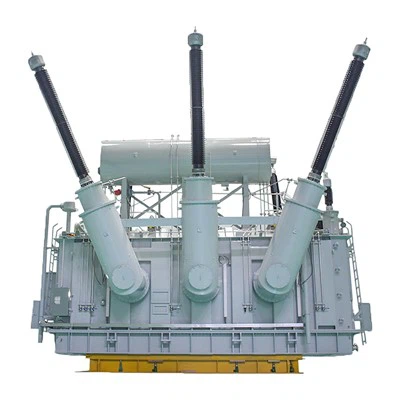
In the dynamic landscape of power electronics, integrated transformers play a pivotal role in various applications, ranging from renewable energy systems to advanced consumer electronics. As a leading supplier of integrated transformers, I’ve witnessed firsthand the significance of the coupling coefficient in shaping the performance of these essential components. This blog aims to delve into the intricate relationship between the coupling coefficient and the performance of an integrated transformer, offering insights that are crucial for engineers, designers, and decision – makers in the industry. Integrated Transformer
Understanding the Coupling Coefficient
The coupling coefficient, often denoted as (k), is a dimensionless parameter that quantifies the degree of magnetic coupling between the primary and secondary windings of a transformer. It ranges from 0 to 1, where (k = 0) implies no magnetic coupling between the windings, and (k = 1) represents perfect magnetic coupling. In an ideal scenario, we would strive for a coupling coefficient of 1, but in real – world applications, achieving this is extremely challenging due to factors such as leakage flux, core materials, and winding geometries.
Mathematically, the coupling coefficient is defined as (k=\frac{M}{\sqrt{L_1L_2}}), where (M) is the mutual inductance between the primary and secondary windings, (L_1) is the self – inductance of the primary winding, and (L_2) is the self – inductance of the secondary winding.
Impact on Efficiency
One of the most critical aspects of transformer performance is its efficiency. Efficiency is defined as the ratio of output power to input power, and it is a key metric for evaluating the effectiveness of a transformer. The coupling coefficient has a direct impact on the efficiency of an integrated transformer.
When the coupling coefficient is high, the mutual inductance between the primary and secondary windings is large. This means that a greater proportion of the magnetic flux generated by the primary winding is linked to the secondary winding. As a result, less energy is lost in the form of leakage flux, which is the magnetic flux that does not link both windings. Reduced leakage flux leads to lower resistive losses in the windings and less core losses, ultimately improving the overall efficiency of the transformer.
Conversely, a low coupling coefficient implies significant leakage flux. This leakage flux induces eddy currents in the surrounding conductors, leading to increased power losses. These losses not only reduce the efficiency of the transformer but also generate heat, which can be detrimental to the long – term reliability of the device.
Influence on Voltage Regulation
Voltage regulation is another important performance parameter of a transformer. It measures the ability of a transformer to maintain a constant output voltage under varying load conditions. The coupling coefficient plays a crucial role in voltage regulation.
A high coupling coefficient ensures that the secondary voltage closely follows the changes in the primary voltage. This is because a well – coupled transformer can transfer energy more effectively from the primary to the secondary winding. As a result, the output voltage remains relatively stable even when the load on the secondary side changes.
On the other hand, a low coupling coefficient can lead to poor voltage regulation. When the load on the secondary side increases, the leakage flux causes a significant drop in the secondary voltage. This is because the magnetic coupling between the windings is weak, and the transformer is less able to transfer the required energy to the secondary side.
Effect on Power Transfer Capacity
The power transfer capacity of an integrated transformer is also affected by the coupling coefficient. A high coupling coefficient allows for more efficient power transfer between the primary and secondary windings. This is because a larger proportion of the magnetic energy generated by the primary winding is transferred to the secondary winding, enabling the transformer to handle higher power levels.
In applications where high power transfer is required, such as in power distribution systems or high – power electronic converters, a transformer with a high coupling coefficient is essential. A low coupling coefficient, however, limits the power transfer capacity of the transformer. The leakage flux reduces the amount of energy that can be transferred between the windings, and the transformer may not be able to meet the power demands of the load.
Considerations for Design and Manufacturing
As a supplier of integrated transformers, we take the coupling coefficient into account during the design and manufacturing process. Several factors can influence the coupling coefficient, and careful consideration of these factors is necessary to optimize the performance of the transformer.
Core Materials
The choice of core material has a significant impact on the coupling coefficient. Materials with high magnetic permeability, such as ferrite or amorphous metals, can enhance the magnetic coupling between the windings. These materials have low reluctance, which allows the magnetic flux to flow more easily through the core, reducing leakage flux and increasing the coupling coefficient.
Winding Geometry
The geometry of the windings also affects the coupling coefficient. Close – wound windings with a large number of turns can increase the mutual inductance between the primary and secondary windings, leading to a higher coupling coefficient. Additionally, the arrangement of the windings, such as the use of interleaved windings, can improve the magnetic coupling by reducing the leakage flux.
Manufacturing Tolerances
During the manufacturing process, tight tolerances are crucial to ensure a consistent coupling coefficient. Variations in the winding turns, core dimensions, and the alignment of the windings can all affect the coupling coefficient. By maintaining strict manufacturing tolerances, we can ensure that the transformers we produce have a high and consistent coupling coefficient.
Real – World Applications
The impact of the coupling coefficient on the performance of an integrated transformer is evident in various real – world applications.
Renewable Energy Systems
In renewable energy systems, such as solar and wind power plants, integrated transformers are used to step up or step down the voltage for efficient power transmission. A high coupling coefficient is essential in these applications to minimize power losses and ensure reliable operation. For example, in a solar power plant, a transformer with a high coupling coefficient can transfer the DC power generated by the solar panels to the AC grid more efficiently, reducing the overall energy losses.
Consumer Electronics
In consumer electronics, such as laptops, smartphones, and tablets, integrated transformers are used for power conversion. A high coupling coefficient is crucial to ensure efficient power transfer and to minimize heat generation. This not only improves the battery life of the devices but also enhances their overall reliability.
Conclusion
The coupling coefficient is a critical parameter that significantly affects the performance of an integrated transformer. It influences the efficiency, voltage regulation, and power transfer capacity of the transformer. As a supplier of integrated transformers, we understand the importance of optimizing the coupling coefficient through careful design and manufacturing processes.
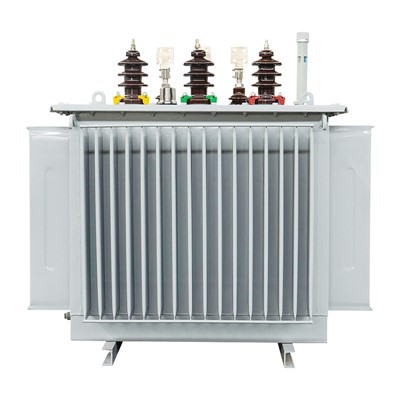
Pole Mounted Transformer If you are in the market for high – performance integrated transformers, we invite you to engage in a procurement discussion with us. Our team of experts is ready to provide you with customized solutions that meet your specific requirements. Whether you are working on a renewable energy project, a consumer electronics device, or any other application, we can offer you transformers with excellent performance characteristics.
References
- Chapman, S. J. (2012). Electric Machinery Fundamentals. McGraw – Hill.
- Grover, F. W. (1946). Inductance Calculations: Working Formulas and Tables. Dover Publications.
- Wadhwa, C. L. (2010). Electrical Power Systems. New Age International.
Nantong Yawei New Energy Technology Co., Ltd.
As one of the most professional integrated transformer manufacturers and suppliers in China, we’re featured by quality products and good service. Please rest assured to wholesale durable integrated transformer made in China here from our factory. Customized orders are welcome.
Address: Room 28-101, Building 27 and 28, No.333 Kaiyuan Avenue, Sunzhuang Subdistrict, Hai’an City, Nantong City, Jiangsu Province, China
E-mail: admin@nantongyawei.com
WebSite: https://www.nantongyawei.com/
