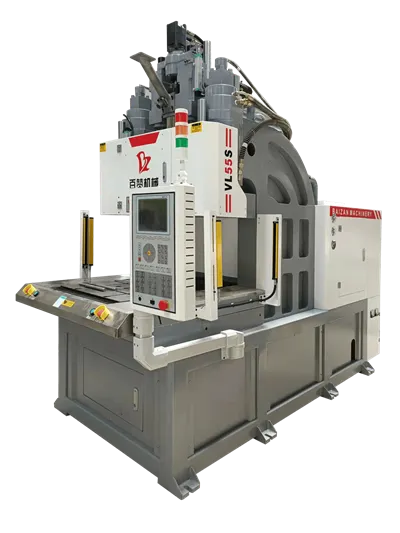
Hey folks, thanks for swinging by the blog. Today I’m tackling a question I get literally every single week from folks looking to level up their molding game: Can a rotary table injection molding machine actually make large-scale products? Spoiler alert: As a supplier who’s worked with these machines for over a decade, the short answer is a resounding YES—but there’s way more to it than just cranking up the tonnage and calling it a day. Let me break this down like I would chat with a buddy over coffee, no stuffy jargon or confusing tech talk. Rotary Table Injection Molding Machine

First, let’s get on the same page about what a rotary table injection molding machine actually is, because I’ve seen so many people mix this up with regular horizontal or vertical presses. A rotary table machine uses that big circular plate (the “table,” duh) that spins instead of moving two halves face-to-face like traditional clamps. Most people know these for small, high-volume parts—think bottle caps, toothbrushes, tiny plastic containers, the stuff that’s made in millions every day. But here’s the thing: The table isn’t just for tiny, identical parts. The secret sauce is its modular design—stations. You can have stations for clamping, injection, cooling, ejecting, even post-molding stuff like inserting metal parts or assembling two halves together, all spinning in a circle.
Now, why do people assume rotary tables can’t do large-scale stuff? Oh, that’s the old myth that’s been hanging around since these machines were invented back in the 50s. Back then, rotary tables maxed out at like 500 tons of clamping force, and the table diameter was small enough to fit a dinner plate on. So anyone who saw one in action back then only saw them making those tiny caps, and wrote the whole machine type off as “only for small parts.” But the tech has blown up since then—no, really, we’re not still using 70s parts here.
Let’s talk numbers, because that’s what the guys on the production floor care about. Modern rotary table machines now go all the way up to 3,000 tons of clamping force. Wait, 3,000 tons? Let me put that in perspective for you. A typical large-scale appliance part, like a fridge door liner, needs around 2,500 tons. A large plastic pallet for warehouses? That’s about 2,800 tons. Oh, and the table diameter? We have models with tables that are over 10 feet across. That’s big enough to fit a standard king-size bed on it, for real. I had a customer last year making 48-inch plastic shipping crates on a 2,200-ton rotary table, and they were pumping out 1,200 perfect crates a day—something they used to make on two traditional presses, taking up twice the floor space.
But here’s the tricky part that’s not just about size: The rotary design isn’t just a gimmick for speed. When you’re making a large part, you need to process it evenly, right? Traditional presses have a single clamping station, so the whole part has to sit in one spot while it cools. With a rotary table, you can split the cooling process across multiple stations. So a large part might spend 2 minutes in the injection station, then spin to a cooling station where it gets chilled for 5 minutes, then another cooling station, then eject. Total cycle time might be 10 minutes instead of the 15 it would take on a traditional press. For large-volume production, that adds up to way less downtime and more parts per hour. My team actually measured this for a customer making pallets last quarter: they got a 35% higher throughput than they had with their old two-press setup, just by switching to a rotary table.
Wait, but hold on—what about part quality? Large-scale parts have zero room for error, right? A fridge liner that warps or has weak spots is a total waste of material. Here’s where rotary table tech actually has an advantage over traditional presses, not a downside. Because the clamping force is distributed evenly around the table, not just from two side plates, you get more uniform pressure across the entire mold. For a large, flat part like a table top or a shipping crate, that means less warping, fewer sink marks, and more consistent thickness. I had a customer who was getting a 2% reject rate on their large outdoor plastic chairs with a traditional press; they switched to our 1,800-ton rotary table and their reject rate dropped to 0.3% in the first month. That’s huge—less scrap means more profit, less waste, everybody wins.
But I can’t just talk about the wins, because there are some things you have to plan for if you’re using a rotary table for large parts. First, mold design. You can’t just take a big mold for a traditional press and plop it on a rotary table. The mold has to be designed to spin with the table, so you have to account for rotation balance, and make sure the injection nozzle can connect evenly every time the table spins around. That’s why our team works with every customer to custom-design the mold adapter for their rotary table before they even buy the machine—we don’t just sell them a press and send them on their way, which I’ve seen other suppliers do. Second, floor space. A 3,000-ton rotary table isn’t a desktop model—it needs about as much space as a small truck takes up in your factory. But here’s the tradeoff: it can replace two or three traditional presses, so you end up saving space overall, not wasting it. Third, material handling. Large parts mean you need bigger robots to take them off the ejector station, so you have to plan for that in your production layout. That’s all stuff we walk customers through during the setup phase, no surprises.
Let me give you a real example, because I hate vague stuff. Last year, we worked with a company that makes large plastic shipping bins for grocery chains. They were using four separate traditional horizontal presses, each making one half of a bin, then they had to assemble them by hand. Total cycle time per bin was 45 minutes, labor cost was through the roof, and they were dealing with fitting issues between the two halves. They upgraded to a 2,500-ton rotary table machine. Now, the table has two stations: one for injecting the first half of the bin, and the second for injecting the second half. After both halves are molded, the table spins to a third station where a built-in robotic arm fuses them together—no hand assembly needed. Total cycle time per bin? 12 minutes. Labor cost dropped by 60% because they only need one operator per shift instead of four. Their defect rate went from 5% to 0.2%, and they were able to take on two new big clients because they could produce 3x more bins per week than before. That’s not a “theory” or a “what if”—that’s actual numbers from a real customer.
Now, I know some of you are still skeptical. You’re thinking, “But rotary tables are for small parts, right?” Let’s address that. Yes, they’re perfect for small, high-volume parts—we still sell hundreds of the smaller 50-500 ton models every year for bottle caps, medical parts, toys. But that doesn’t mean they can’t do large parts too. The key is matching the tonnage and table size to your part’s needs, not writing off the whole machine type. I’ve had other suppliers try to tell me “rotary tables can’t do large parts” and then I see them at trade shows showing off their new 2,800-ton rotary table making pallets. Hypocritical, right?
Another common question: What about customization? A lot of large-scale parts are custom, not one-size-fits-all. Can rotary table machines handle that? Absolutely. The table can be swapped out with different mold adapters, so you can make a large part one week and a different large part the next, no need to reconfigure the whole press. For a customer making custom industrial bins, they just switch the mold plate on the table in 45 minutes, instead of the 3 hours it takes to swap a traditional press’s mold. That’s flexibility that traditional presses can’t touch.
Wait, let’s talk about cost, because that’s what everyone cares about. Upfront, a rotary table for large parts might seem more expensive than a single traditional press for the same tonnage. But when you factor in lower labor, less scrap, higher throughput, and lower floor space costs? It’s actually cheaper in the long run. The customer I mentioned earlier: they paid 20% more upfront for the rotary table, but they recouped that cost in 10 months because of the savings in labor and material. And their production capacity tripled, which meant they didn’t have to rent extra factory space or hire as many workers. That’s a no-brainer for any growing business.
Now, let’s be real—this isn’t for every single part. If you only need to make 100 large parts a month, a rotary table might not make sense, because the setup time would eat into your profits. But if you’re making 10,000 or more large parts a month? That’s when a rotary table shines. It’s built for high-volume, consistent production, so if your business is scaling up, that’s exactly what you need.
I get it, switching to a new type of molding machine is scary. You’re used to what works, you don’t want to waste money on something that doesn’t deliver. But here’s the thing: rotary table tech has come a long way from the clunky 1950s models. We use servo motors for precise control, we have built-in quality sensors that check every part for defects before it even leaves the machine, and our after-sales team is available 24/7 if you have an issue—no waiting 3 days for a technician to show up.
If you’re someone who’s been dealing with slow cycle times, high scrap rates, or not enough capacity for your large-scale parts, I’m here to tell you that a rotary table injection molding machine is a real, proven solution. I’ve seen it work for hundreds of customers, big and small, across every industry from packaging to appliances to industrial goods.
Now, I know this is a lot of info, and you probably have questions. Maybe you want to know what tonnage you need for your specific part, or how much space a machine would take in your factory, or what kind of ROI you can expect. The best way to figure that out is to talk directly—we can work with you to run a sample of your part, test it on our machines, and give you a full breakdown of costs, cycle times, and benefits. No sales pitch, no hidden fees, just straight talk about what would work for your business.
If you’re ready to stop settling for slow, expensive production and start making more high-quality large-scale parts, hit us up to connect for a procurement consultation. We’ll walk you through every step, from initial design to installation to after-sales support, so you can feel confident in your decision.
Wait, before I go, I just want to make one thing clear: I’m not here to say rotary table machines are better than every traditional press for every job. If you need a low-volume, custom large part, a traditional press might be the right call. But if you’re doing high-volume, consistent large-scale production? The rotary table is where it’s at. That’s the gap I see a lot of people missing—they group all molding machines into one bucket, but each type has its sweet spot.
Alright, that’s all for today. Thanks for sticking with me through the whole thing. If you have any other questions, drop a comment below or reach out directly. Let’s make your production run smoother.
Rotary Table Injection Molding Machine References:
- MoldMaking Technology. Rotary Table Injection Molding: Advantages for High-Volume Production of Complex Parts, 2022.
- Plastic Engineering & Technology. Large-Format Rotary Molding: Scaling Up for Industrial and Consumer Goods, 2023.
- Society of Plastics Engineers. Injection Molding Machine Capacity and Part Optimization Guide, 2021.
- Modern Plastics. High-Tonnage Rotary Table Systems: Breaking the Size Barrier for Large-Scale Parts, 2022.
Guangdong Baizan Intelligent Equipment Co., Ltd.
We are one of the most professional rotary table injection molding machine manufacturers and suppliers in China. We warmly welcome you to buy customized rotary table injection molding machine at competitive price from our factory. If you have any enquiry about pricelist and quotation, please feel free to email us.
Address: No.8, Jianye Road, Dahuai Town, Enping City, Jiangmen City, Guangdong
E-mail: wjx@baizanjx.com
WebSite: https://www.baizanplast.com/
