As a semi-worsted yarn supplier, I get asked this question all the time: how does a yarn’s weight actually impact how it’s used? It’s not just a number stamped on a cone or labeled on a spool—weight dictates everything from the drape of a finished garment to the type of machinery that can process it, the season it’s made for, and even the cost for your production line. Over the past 12 years I’ve been sourcing and supplying semi-worsted yarns to knitwear mills, apparel brands, and craft producers across North America and Europe, I’ve seen firsthand how miscalculating yarn weight can turn a promising design into a costly mistake, or a high-margin bulk order into a product that sits on shelves because it’s not fit for purpose. Semi-worsted, for those who might be newer to the space, is unique in its production method: it’s made from short-staple wool (or a blend of wool and synthetic fibers like acrylic, polyester, or nylon) that’s combed less thoroughly than worsted yarn. That gives it a slightly softer, more textured hand than fine worsted, while still being smoother than regular woolen yarn—making it a middle ground that balances comfort, durability, and versatility. And its weight, measured in grams per skein, ounces per cone, or sometimes tex count (linear density), is the single biggest factor in unlocking that versatility or limiting it. Semi-worsted Yarn
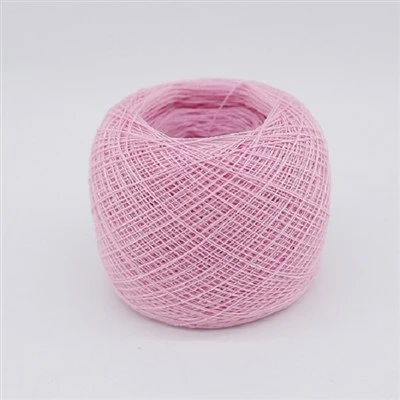
Let’s start with the basics: how semi-worsted yarn weight is categorized, because not all suppliers use the same system. At our facility, we split our semi-worsted lines into four core weight groups: lace weight, fine weight, medium weight, and bulky weight. Each serves a distinct use case, and choosing the wrong one can derail an entire project. For example, lace-weight semi-worsted is typically 100–150 grams per 1,000 meters, or what knitters would call lace weight (sometimes 200–300 yards per ounce). This yarn is so fine that it’s almost delicate—think gossamer-thin shawls, light scarves, or even delicate lingerie trim. Last year, a small boutique brand came to us with a prototype for a summer wrap dress made entirely from semi-worsted yarn. They’d originally sourced a fine worsted yarn and found it too scratchy against skin, so they switched to semi-worsted for softness, but picked a lace weight to keep the dress lightweight for 80-degree weather. The problem? Lace-weight semi-worsted, while soft, has a tendency to snag easily when woven or knitted at the gauge needed for a dress—we ended up suggesting a fine-weight semi-worsted (150–250 grams per 1,000 meters) instead. That adjustment made all the difference: the fine weight was still light enough for summer, had enough tensile strength to hold up to repeated wear, and the semi-worsted construction gave it a gentle drape that moved with the body, unlike the stiff worsted they’d tried first. That order turned into a 5,000-piece bulk repeat, which showed me how even a small shift in weight can make a product commercially viable.
Next, medium-weight semi-worsted, which is the most popular of our lines and falls between 250–400 grams per 1,000 meters. This is the workhorse of semi-worsted, used for everything from everyday sweaters and kids’ knitwear to winter accessories like hats and gloves. The key here is balance: medium weight is thick enough to be warm without being heavy, smooth enough to hold crisp stitches for patterns, and durable enough for frequent washing. A big part of why medium-weight semi-worsted is so widely used is its compatibility with both circular knitting machines (the standard for bulk apparel production) and hand knitting, which makes it a go-to for brands that offer both ready-to-wear and DIY craft lines. Last year, a major outdoor apparel company reached out to us because they’d been using woolen yarn for their line of midweight sweaters, but they were dealing with high pilling and shrinkage. We recommended our medium-weight 80/20 wool-acrylic blend semi-worsted yarn: the acrylic added durability and reduced shrinkage, the medium weight meant the sweater could be layered without bulk, and the semi-worsted combing process left short fibers intact enough to add softness, unlike worsted which is too smooth to hold the blend evenly. They tested a small run of 1,000 sweaters, and reported a 30% drop in pilling complaints compared to their old product, plus a 15% lower production cost because the medium-weight yarn knit faster on their machines than a thinner worsted. That’s the other often-overlooked angle: semi-worsted weight affects production efficiency. Thicker yarns mean fewer passes on knitting machines, less thread changeover, and lower labor time per unit—something every supply chain manager cares about.
Then there’s bulky-weight semi-worsted, which is 400+ grams per 1,000 meters. This is for cold-weather, high-insulation products: heavy coats, thick beanies, blankets, and even winter gloves. The difference here is that bulky semi-worsted needs to have enough volume to trap air, which is how it keeps you warm, but not so thick that it becomes stiff and unwieldy. I’ve seen brands go wrong here too: a few years back, a craft supply brand ordered a 600-gram per 1,000-meter bulky semi-worsted for a line of chunky knit blankets. They thought thicker meant cozier, but the yarn was so heavy that the blanket sagged badly after just one wash, and the semi-worsted’s textured fibers meant it pilled constantly. We suggested a 420-gram bulky-weight semi-worsted instead, blending 25% nylon to add structural stability. The adjusted yarn held its shape, the medium-heavy weight was thick enough to keep out cold, and the nylon reduced pilling. That small tweak turned the blanket from a one-season product to a bestseller that sold out three times in 18 months. It taught me that for bulky semi-worsted, weight isn’t just about insulation—it’s about structural integrity. Too heavy, and the finished product loses its shape; too light, and it won’t provide enough warmth.
Now, let’s talk about the less obvious impacts of yarn weight: cost and sustainability, two factors that are more important now than ever for brands and retailers. For suppliers like us, the price of semi-worsted yarn is closely tied to weight: thicker yarn uses more fibers per meter, so it costs more to produce. But there’s a trade-off for buyers: thinner yarn might be cheaper per skein, but if you need more skeins to make a garment, the total cost can be higher. For example, a lace-weight sweater might require 10 skeins of yarn at $5 each, totaling $50, while a medium-weight sweater uses 3 skeins at $12 each, totaling $36—even though the per-skein price is higher, the total cost is lower. That’s a calculation I walk through with almost every new client, especially small brands with tight budgets. Sustainability is another angle: thinner yarns often rely on longer fibers (since they need to be finer), which are scarcer and more resource-intensive to source. Thicker semi-worsted, by contrast, can use a higher percentage of recycled short-staple wool or synthetic fibers, which reduces waste and lowers the carbon footprint. We’ve developed a line of recycled semi-worsted yarns in medium and bulky weights that use 100% recycled wool scraps from textile mills, and clients often choose them not just for sustainability, but because the thicker weight means less material is used per garment than if they’d gone with a thinner worsted option.
I should also mention how semi-worsted weight interacts with end-use applications that aren’t just knitting. We supply semi-worsted yarn to weavers too, and here, weight dictates the weave structure. Lace-weight semi-worsted works for lightweight voile or chiffon-like fabrics, while medium-weight works for suiting or heavy jersey, and bulky for upholstery fabric. Last year, a home goods brand came to us looking for semi-worsted yarn to weave area rugs. They’d tried a thick woolen yarn, but it shed too much, and a fine worsted, which was too slippery to hold the rug’s pile. We suggested our 450-gram bulky-weight semi-worsted blend, which had enough texture from the short-staple fibers to grip the rug’s backing, and enough tensile strength to withstand foot traffic. The rugs they made from that yarn are now sold in 20 major home decor stores, and they told us it’s the most durable rug line they offer. That’s a perfect example of how yarn weight, paired with semi-worsted’s unique fiber structure, solves a problem that neither woolen nor worsted yarn could.
As someone who’s in the thick of semi-worsted supply day in and day out, I know that many buyers treat yarn weight as a box to check—something to select based on a pattern’s gauge or a product’s label. But over the years, I’ve learned that it’s a variable that shapes every part of a product’s journey: from the designer’s initial sketch, to the production line’s efficiency, to the customer’s satisfaction after they wash or wear the item. The mistake I see most often is choosing a weight based on what’s “trendy” at the time, rather than what’s functional. Chunky knit blankets were all the rage a few years back, but many brands didn’t realize that a truly chunky, wearable blanket needs a balanced bulky weight—not a yarn so thick it’s impossible to fold or store. Similarly, fine lightweight shawls need a lace weight that’s soft enough to wear against skin, but sturdy enough to not tear when draped over shoulders.
If you’re a brand, mill, or craft producer working with semi-worsted yarn, don’t hesitate to reach out when you’re weighing your options. I’ve spent years refining our product lines to cover every weight category, from fine lace to heavy bulky, and I can help you match the right weight to your specific use case—whether that’s a summer dress, a winter sweater, a durable rug, or a line of kids’ knitwear. We work with clients of all sizes, from small indie brands to large multinational apparel companies, and we’re always happy to share sample skeins or custom blend options to make sure your project turns out exactly as you envisioned. Whether you’re looking to adjust a current product line, develop a new design, or troubleshoot a manufacturing issue with your current yarn, we’re here to help you find the right semi-worsted weight for your needs. Let’s connect to start the conversation on your next project.
Woolen-spun Yarn with Colored Flecks References
- Hunter, L. (2021). Semi-Worsted Yarn: Production, Properties, and Applications. Textile Technology Press.
- Jones, M. (2019). Yarn Weight and Its Impact on Garment Performance. Journal of Knitwear and Apparel Manufacturing, 12(3), 45–62.
- Smith, A. (2022). Sustainable Yarn Selection for Midweight Apparel. Global Textile Sustainability Review, 8(2), 112–127.
- Carter, R. (2020). Semi-Worsted vs. Worsted: Key Differences for Bulk Production. Industrial Textile Management Journal, 17(4), 78–91.
- Lee, S. (2018). The Relationship Between Yarn Weight and Manufacturing Efficiency in Circular Knitting. International Journal of Fashion and Textile Technology, 5(1), 33–48.
Huangshan Aotai Textile Co., Ltd.
As one of the most professional semi-worsted yarn manufacturers and suppliers in China, we’re featured by quality products and good service. Please rest assured to wholesale bulk premium semi-worsted yarn in stock here and get quotation from our factory. We also accept customized orders.
Address: Development Zone, Bei’an Town, She County, Huangshan City, Anhui Province
E-mail: aotaifangzhi2007@163.com
WebSite: https://www.cn-aotai.com/
