As a commercial grain mill supplier, I’ve spent the last 12 years not just building milling equipment, but understanding that a mill’s success doesn’t end when a machine is installed. I’ve worked with dozens of farms and food processing operations that once thought a one-time equipment purchase would carry them for a decade—only to hit costly snags because they skipped the after-sales support that turns a good mill into a long-term asset. Let’s break down what after-sales services actually matter for a commercial grain mill, and why cutting corners here is the fastest way to derail your operation. Commercial Grain Mill
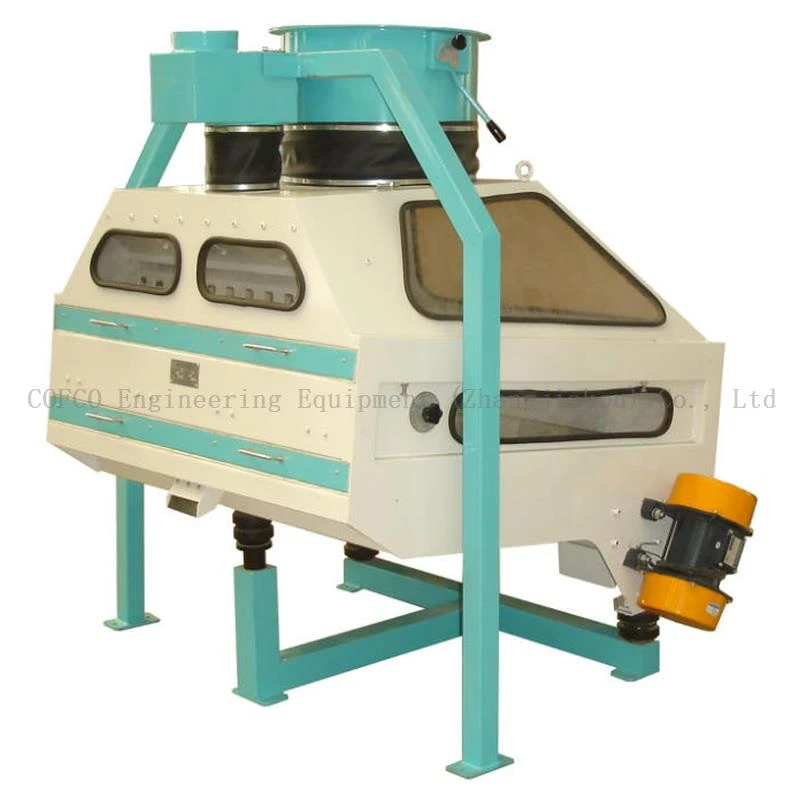
First, let’s start with on-site installation and commissioning, because even a top-of-the-line mill is useless if it’s installed wrong. I’ve seen this play out too many times: a farmer buys a 50-bushel-per-hour mill online, hires a local handyman to set it up, and within two weeks the drive shaft is warped because the base wasn’t level. My team doesn’t just drop off equipment and point to a manual. We schedule a two-day on-site visit where we handle every step: anchoring the mill frame to reinforced concrete (we specify the concrete thickness, not just leave it to the customer), aligning all rollers and gearboxes, calibrating the sifters to match the customer’s grain type (soft wheat vs. corn vs. sorghum have totally different milling needs), and running a 24-hour test cycle with the customer’s own grain. We also train their lead operator mid-installation, so by the time we leave, they can troubleshoot small issues before they become emergencies. Last year, a small feed mill in Iowa saved $12,000 in downtime costs because we caught a faulty bearing during commissioning instead of letting it fail three months later.
Next, preventive maintenance programs. Commercial grain mills run 10 to 12 hours a day, six days a week, so wear is inevitable—but most issues are predictable if you track them. Our annual maintenance package is built around the mill’s usage data: we log how many bushels are milled, the vibration levels of the rollers, and the temperature of the motor. Twice a year (more often for high-volume operations), a service technician visits to inspect wear parts: replacing mill screens before they tear, adjusting roller gaps to maintain consistent particle size, and lubricating hard-to-reach components that local mechanics usually miss. We also provide a custom maintenance calendar for each client, with reminders for oil changes, belt replacements, and sifter cleaning. A wheat mill in Kansas switched to our maintenance plan three years ago; their annual downtime dropped from 18 days to 4, and their mill’s lifespan stretched from 15 years to 19 because of proactive care.
Then there’s 24/7 technical support. Milling doesn’t stop for harvest season, and a broken mill at 2 a.m. during peak harvest can cost a farmer $500 an hour in lost grain processing. That’s why our support team is on call 365 days a year—no holiday closures, no “wait until Monday” runaround. Most minor issues (like a clogged sifter or a misaligned sensor) can be fixed over a 15-minute video call with our technicians. We’ve even created a private portal for clients where they can upload photos or videos of their mill’s issues, and our team will respond within 10 minutes with step-by-step fixes. For major issues, we keep a stock of critical spare parts at three regional warehouses, so we can ship a replacement motor or gearbox to a client within 24 hours. Last harvest, a client in Nebraska had a drive shaft failure on a Saturday; our team shipped the part that same day, and a local technician we partner with installed it Sunday morning, letting them resume processing by noon instead of losing an entire day.
Spare parts management is another key service, because generic parts don’t fit commercial mills built for heavy use. I’ve had clients try to save money by buying cheap replacement screens from a third-party, only to have the screens warp under the mill’s pressure, leading to uneven flour grade and increased wear on the rollers. Our spare parts are precision-made to match our mill’s specifications, and we offer a volume discount for clients who sign up for a quarterly parts bundle. We also maintain a “quick ship” inventory of the 20 most commonly replaced parts (rollers, bearings, belts, screens) so clients don’t have to wait weeks for a replacement. For example, a rice mill in Arkansas once ran out of replacement rollers during a 72-hour processing run; our team shipped new rollers overnight, and they were able to complete their customer order without paying a $30,000 late fee.
Customization and upgrade support are also part of after-sales service, because a mill’s needs change as a business grows. A small grain farm might start with a mill for their own use, then expand to sell to local bakeries, so they need to upgrade their mill to produce finer flour. Our team works with clients to retrofit their existing equipment—adding color sorters, expanding sifting capacity, or increasing the mill’s speed—instead of making them buy a whole new machine. Last year, a client in Minnesota wanted to switch from processing animal feed to human-grade flour; we upgraded their mill’s roller system and added a dust extraction unit, which cost them 60% less than a new mill and cut their processing time by 20%. We also provide free consultations for clients looking to adapt to new grain types, like processing ancient grains or specialty corn, which have different milling requirements.
Training and knowledge sharing are often overlooked, but they make a huge difference in how well a mill performs. We offer two types of training: on-site operator training during commissioning, and annual advanced workshops at our facility. The basic training covers daily checks, safety protocols, and how to adjust the mill for different grains. The advanced workshops dive into troubleshooting, quality control (testing flour protein content, particle size, and moisture), and optimizing the mill’s energy use—something that can cut a client’s electricity costs by up to 15%. We also host a quarterly online webinar where we share tips on mill maintenance, new grain processing techniques, and regulatory requirements for food-grade milling. A team of mill operators from a cooperative in Ohio told us that after attending our advanced workshop, they reduced their flour waste by 8% and increased their monthly output by 10%.
Safety support is a non-negotiable for commercial grain mills, since they have moving parts and generate fine dust, which is a fire hazard. Our after-sales team conducts annual safety audits, checking for dust collection systems, emergency stop buttons, and proper grounding. We also provide free safety updates, like retrofitting older mills with fire suppression systems that meet current OSHA standards. Last year, we worked with a mill in Illinois to upgrade their dust collection system; within six months, they passed their OSHA inspection without any fines, and reduced their fire risk by 90%. We also train clients on best practices for dust management, like regular cleaning of filter bags and proper storage of grain.
Now, let’s talk about what this means for you, as someone considering a commercial grain mill. I’ve seen too many clients choose a supplier just based on upfront cost, only to spend two to three times that amount on repairs, downtime, and replacement parts in the first three years. The after-sales services I’ve outlined aren’t just “extra perks”—they’re the reason a commercial grain mill is a long-term investment, not a short-term expense. A mill without solid after-sales support is just a heavy piece of metal that will break down when you need it most, at the worst possible time.
If you’re currently looking to buy a commercial grain mill, or you have an existing mill that’s been giving you headaches, don’t hesitate to reach out for a personalized consultation. We’ll work with you to assess your mill’s current condition, outline the after-sales services that fit your operation, and help you avoid the mistakes that have cost other clients thousands. The goal isn’t just to sell you a mill—it’s to make sure your grain processing runs smoothly, every day, for years to come.
Flour Automatic Packing Machine References
- "Commercial Grain Milling Operations: Maintenance Best Practices", Food and Agriculture Organization of the United Nations, 2021.
- "OSHA Safety Guidelines for Grain Handling Facilities", U.S. Occupational Safety and Health Administration, 2022.
- "Effect of Preventive Maintenance on Industrial Milling Equipment Lifespan", Journal of Food Processing and Preservation, Vol. 45, Issue 12, 2021.
- "Cost-Benefit Analysis of After-Sales Services for Agricultural Machinery", International Journal of Agricultural Management, Vol. 10, Issue 3, 2020.
- "Quality Control Standards for Commercial Flour Production", American Association of Cereal Chemists International, 2021.
COFCO Engineering Equipment (Zhangjiakou) Co., Ltd.
As one of the most professional commercial grain mill manufacturers and suppliers in China, we also support customized service. Please feel free to wholesale advanced commercial grain mill for sale here from our factory. Quality products and reasonable price are available.
Address: No.4 ZhongLiang Street, high-tech industrial development zone, Zhangjiakou, Hebei, PRC
E-mail: mayihui@cofco.com
WebSite: https://www.ceeflourmill.com/
