Hey there! As a supplier of flange bolting Belleville washers, I get this question a lot: Can Belleville washers be used in flange bolting of nuclear power plants? Well, let’s dive right in and break it down. Flange Bolting Belleville Washer

When it comes to nuclear power plants, the stakes are incredibly high. Safety, reliability, and performance are non – negotiable. Every component used in these facilities must meet the most stringent standards. So, the idea of using Belleville washers needs to be carefully evaluated.
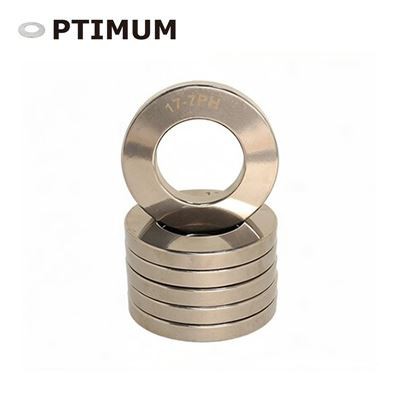
First of all, let’s talk about what Belleville washers are. They’re these cone – shaped washers that are designed to provide a specific amount of spring force. That spring force is really useful in applications where you need to maintain a constant preload on bolts. In a flange connection, for example, the preload on the bolts helps to keep the flange seal tight, preventing leaks of whatever fluid or gas is flowing through the pipes.
One of the big advantages of Belleville washers in flange bolting is their ability to compensate for thermal expansion and contraction. Nuclear power plants operate at high temperatures, and the materials used in the pipes and flanges expand and contract as the temperature changes. This can cause the bolt preload to change, potentially leading to a leaky seal. But Belleville washers can adjust to these dimensional changes by deflecting and providing a consistent load on the bolts.
Another plus is their compact size. In a nuclear power plant, space can be tight, and every inch matters. Belleville washers take up less axial space compared to traditional flat washers or other methods of maintaining bolt preload. This makes them a more practical choice in some situations where space is limited.
However, the nuclear industry has a bunch of strict regulations and standards. These are in place to ensure the safety of the workers, the public, and the environment. Belleville washers used in nuclear power plant flange bolting need to meet these standards. For instance, they must be made from high – quality materials that can withstand the harsh operating conditions, including high temperatures, radiation, and corrosion.
The materials used in nuclear – grade Belleville washers are usually carefully selected. Stainless steel is a common choice because it has good corrosion resistance. Some applications might require more exotic alloys to handle extreme conditions. These materials need to be thoroughly tested to make sure they won’t degrade over time and cause problems.
Manufacturing processes also play a crucial role. The Belleville washers need to be produced with high precision. Even slight variations in the dimensions or the shape of the washers can affect their performance. So, we as suppliers have to follow strict quality control procedures during the manufacturing process. This includes things like precise machining and proper heat treatment to ensure that the washers have the right mechanical properties.
Testing is another important aspect. Before being used in a nuclear power plant, Belleville washers are subjected to a battery of tests. These can include load – deflection tests to make sure they provide the right amount of spring force, as well as tests for corrosion resistance, radiation resistance, and fatigue resistance. Only after passing these tests can the washers be considered suitable for use in nuclear applications.
Now, let’s talk about some potential challenges. One of the main concerns is the risk of creep. Creep is the gradual deformation of a material under a constant load over time. In a nuclear power plant, where the operating conditions are harsh and long – term reliability is essential, creep can be a real problem. If the Belleville washers creep too much, the bolt preload can decrease, leading to a potentially unsafe situation. To mitigate this risk, we need to choose materials with low creep rates and design the washers in a way that minimizes the effects of creep.
Another challenge is the installation process. Proper installation is crucial for the performance of Belleville washers. If they’re not installed correctly, they might not provide the intended preload. Workers in nuclear power plants need to be properly trained in how to install these washers. This includes things like using the right tools and following the correct torque settings.
Despite these challenges, there are many successful cases where Belleville washers have been used in flange bolting of nuclear power plants. In fact, in some situations, they’re the preferred choice because of their unique properties. They’ve helped to improve the reliability of flange connections and reduce the risk of leaks.
So, to answer the question, yes, Belleville washers can be used in flange bolting of nuclear power plants, but it’s a very carefully regulated process. As a supplier, we have to work closely with our customers in the nuclear industry to make sure that the washers meet all the necessary requirements.
If you’re in the nuclear power industry and are looking for reliable flange bolting Belleville washers, we’re here to help. We’ve got the experience, the expertise, and the quality control processes in place to provide you with top – notch products. Whether you need a small quantity for a maintenance project or a large order for a new construction, we can work with you to meet your needs. Reach out to us to start a conversation about your specific requirements. We’d love to discuss how our Belleville washers can be a great fit for your flange bolting applications in nuclear power plants.
NFE25511 French Serrated Spring Washers References:
- ASME Standards for Nuclear Components
- Nuclear Regulatory Commission (NRC) Guidelines
- Technical Papers on High – Temperature and Radiation – Resistant Materials for Power Generation
Yangzhou Optimum Spring Manufacturing Co., Ltd.
As one of the most professional flange bolting belleville washer manufacturers and suppliers in China, we’re featured by quality products and good service. Please rest assured to buy customized flange bolting belleville washer made in China here from our factory. For more information, contact us now.
Address: No.9 West of Shuangtang Rd, Yangzhou, P.R. China 225000
E-mail: susie@optimum-spring.com
WebSite: https://www.optimum-spring.com/
