As a supplier deeply entrenched in the realm of Switched Reluctance Motors (SRMs), I’ve witnessed firsthand the remarkable versatility and efficiency these motors bring to various industries. One of the most frequently asked questions I encounter is about the starting methods of SRMs. In this blog, I’ll delve into this fundamental aspect, exploring the different starting techniques and their applications. Switched Reluctance Motor
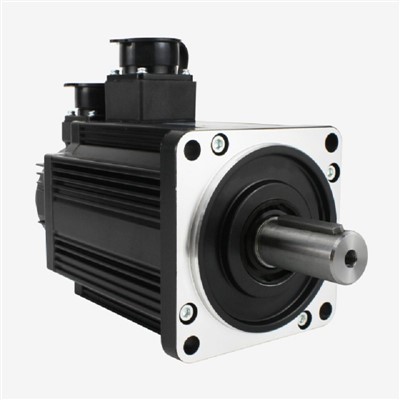
Switched Reluctance Motors are a type of electric motor that operates based on the principle of reluctance torque. Unlike traditional motors that rely on magnetic fields produced by permanent magnets or electrical currents in windings to generate torque, SRMs use the tendency of ferromagnetic materials to move towards a position of minimum magnetic reluctance. This unique operating principle gives SRMs several advantages, including high efficiency, robustness, and a simple and rugged construction.
Direct On-Line (DOL) Starting
The simplest and most straightforward starting method for SRMs is the Direct On-Line (DOL) starting. In this method, the motor is directly connected to the power supply, and the full supply voltage is applied across the motor windings. This causes the motor to start rotating immediately, as the magnetic field generated by the stator windings interacts with the rotor, creating a torque that initiates rotation.
DOL starting is commonly used for small to medium-sized SRMs in applications where the load is not too heavy and the starting current can be tolerated. The main advantage of DOL starting is its simplicity and low cost, as it does not require any additional starting equipment. However, it also has some limitations. The high starting current can cause a significant voltage drop in the power supply system, which may affect other electrical equipment connected to the same supply. Additionally, the high starting torque can cause mechanical stress on the motor and the connected load, potentially leading to premature wear and tear.
Soft Starting
To overcome the limitations of DOL starting, soft starting methods are often employed. Soft starting involves gradually increasing the voltage applied to the motor windings during the starting process, rather than applying the full voltage immediately. This reduces the starting current and torque, minimizing the impact on the power supply system and the mechanical components of the motor and the load.
One common soft starting method for SRMs is the use of a variable voltage controller. This device gradually increases the voltage applied to the motor windings from a low initial value to the full supply voltage over a period of time. The rate of voltage increase can be adjusted to suit the specific requirements of the application, allowing for a smooth and controlled start.
Another soft starting technique is the use of a chopper circuit. A chopper circuit is an electronic device that controls the average voltage applied to the motor windings by rapidly switching the power supply on and off. By varying the duty cycle of the chopper, the average voltage applied to the motor can be adjusted, effectively controlling the starting current and torque.
Soft starting methods offer several advantages over DOL starting. They reduce the starting current and torque, which can extend the lifespan of the motor and the connected load. They also minimize the voltage drop in the power supply system, ensuring stable operation of other electrical equipment. However, soft starting methods are more complex and expensive than DOL starting, as they require additional starting equipment.
Star-Delta Starting
Star-Delta starting is a widely used starting method for three-phase induction motors, and it can also be adapted for use with SRMs. In this method, the motor windings are initially connected in a star configuration during the starting process. This reduces the voltage applied to each winding to approximately 58% of the line voltage, which in turn reduces the starting current and torque.
Once the motor has reached a certain speed, the winding connection is switched from the star configuration to the delta configuration. In the delta configuration, the full line voltage is applied to each winding, allowing the motor to operate at its rated speed and torque.
Star-Delta starting offers a good balance between simplicity, cost, and performance. It reduces the starting current and torque, which can help to protect the motor and the connected load. However, it requires a more complex control circuit to switch the winding connection from star to delta, and it may not be suitable for applications that require a rapid start.
Electronic Starting
In recent years, electronic starting methods have become increasingly popular for SRMs. These methods use advanced power electronics and control algorithms to provide precise control over the starting process, offering several advantages over traditional starting methods.
One common electronic starting method is the use of a rotor position sensor. A rotor position sensor provides information about the position of the rotor relative to the stator windings, allowing the motor control system to precisely control the timing and magnitude of the current supplied to the stator windings. This enables smooth and efficient starting, as the motor can be controlled to operate at the optimal point in its torque-speed curve.
Another electronic starting technique is the use of a current-controlled starting algorithm. In this method, the motor control system adjusts the current supplied to the stator windings based on the estimated torque required to start the motor. By controlling the current, the starting torque can be optimized, reducing the starting current and minimizing the mechanical stress on the motor and the load.
Electronic starting methods offer several advantages over traditional starting methods. They provide precise control over the starting process, allowing for smooth and efficient starting. They also offer better protection for the motor and the connected load, as the starting current and torque can be carefully controlled. However, electronic starting methods are more complex and expensive than traditional starting methods, as they require advanced power electronics and control algorithms.
Conclusion
In conclusion, the starting method of a Switched Reluctance Motor is a critical aspect that can significantly affect the performance and reliability of the motor and the connected load. There are several starting methods available, each with its own advantages and limitations. The choice of starting method depends on various factors, including the size and type of the motor, the nature of the load, and the specific requirements of the application.
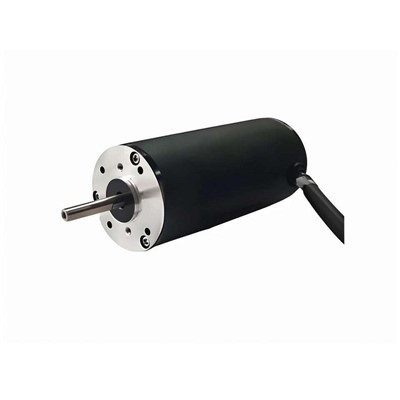
As a supplier of Switched Reluctance Motors, I understand the importance of selecting the right starting method for your application. Our team of experts can provide you with comprehensive advice and support to help you choose the most suitable starting method for your needs. We also offer a wide range of high-quality SRMs and starting equipment, ensuring that you have access to the best solutions for your application.
AC Servo Motor If you’re interested in learning more about Switched Reluctance Motors or would like to discuss your specific requirements, please feel free to contact us for a consultation. We look forward to working with you to find the perfect solution for your application.
References
- Miller, T. J. E. (2001). Switched Reluctance Motors and Their Control. Magna Physics Publishing.
- Krishnan, R. (2001). Switched Reluctance Motor Drives: Modeling, Simulation, Analysis, Design, and Applications. CRC Press.
- Bolton, W. (2006). Electrical Engineering Principles. Newnes.
Zibo Auric Mechanical and Electrical Technology Co., Ltd.
As one of the leading switched reluctance motor manufacturers and suppliers in China, we warmly welcome you to buy advanced switched reluctance motor for sale here from our factory. All customized motors are with high quality and competitive price.
Address: B419, High-tech Entrepreneurship Park, High-tech Zone, Zibo City
E-mail: cui@auricmotor.com
WebSite: https://www.auricmotor.com/
