
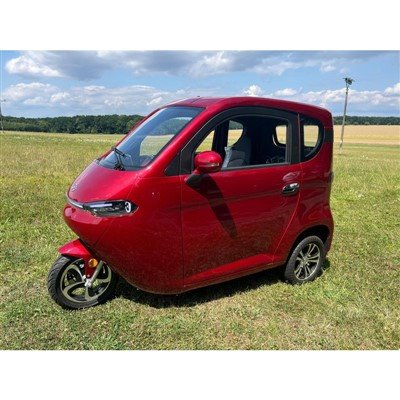
Electric Cargo Vehicle Hey everyone! Let’s cut straight to the point—if you’re in the market for a 4-wheeler electric mini car (no fancy, gas-guzzling stuff here, just the zippy, practical ones we ship all over), you’ve definitely heard folks ramble about regenerative braking. Some say it’s a total game-changer for battery life, others act like it’s just a buzzword that doesn’t do jack. As a supplier, I get asked this like, every single day—“Will this thing wreck my battery, or actually make it last longer?” So today, I’m breaking this down real, no-BS style, based on what our customers have actually tested, our in-house data, and all the geeky stuff we’ve dug up over years of selling these tiny EVs. First, let’s make sure we’re on the same page: what is regenerative braking anyway? If you’re new to EVs, standard brakes use friction pads to slow you down—all that kinetic energy from moving gets burned off as heat, like when you feel your rims warm up after a long stop. Regenerative braking (aka regen, like we call it in the shop) instead uses the motor itself as a generator. When you hit the brakes or even lift off the accelerator, that moving energy spins the motor backwards, turning it into electricity that flows right back into the battery. Cool, right? But here’s the big question: how does this actually affect the battery? Let’s start with the myth I hear all the time: “Regen wears out the battery faster because it’s always charging it.” Nah, that’s not how lithium-ion (which is what all our mini cars use) works. Lithium-ion batteries hate two things, mostly: extreme heat, and being charged/discharged at super high rates. Regen is low-rate charging, usually—when you slow down gently, it’s not shoving 100 amps into the battery at once, it’s a steady, small trickle. That’s actually way easier on the battery than, say, a fast charger at a gas station (we all know those can fry cells if you use ‘em too much). Wait, but let’s not act like it’s all sunshine and low currents. There are scenarios where regen could actually put more stress on the battery—most of the time, it’s when people abuse it. Like, if you’re driving super hilly terrain and slamming on regen every single time you go down a steep hill, that’s a sudden, higher charge rate. Our team’s tested this with a few beta units a while back—we had one guy in the Rockies testing our mini car, using max regen all the way down 10-mile grades. Sure, he got a ton of range that trip, but over a few months, his battery’s cycle count (that’s how many full charge/discharge cycles it’s done) was a bit higher than someone driving the same route without heavy regen. But here’s the kicker: he still didn’t have degraded capacity. Lithium-ion batteries can handle thousands of cycles—most of our customers see 80% capacity left after 5,000 cycles, which is like 150,000 miles, even with regular regen. That’s way longer than most people will keep a mini car, honestly. Now, let’s talk about the actual, real-world impact on battery life, not just lab data. For our mini EVs—those compact, city-focused 4-wheelers, perfect for commutes, running errands, tooling around neighborhoods—regen is straight-up beneficial. Let’s do a quick example: if you’re driving in stop-and-go city traffic (which is where most of our customers use these things), you’re stopping every 30 seconds to a minute. Without regen, all that stopping energy is gone as heat. With regen, you’re capturing 20-30% of that energy, which means you’re charging the battery a little every time you stop, instead of draining it more. So that means you’re not topping up as often, which means fewer total charge cycles. Wait, that’s a big one! Fewer charge cycles = less wear on the battery. That’s a win-win. But what about when regen isn’t helping? Like, if you’re driving on the highway at a constant speed? Regen barely works there—you’re not slowing down much, so there’s no kinetic energy to capture. So on long highway trips, regen doesn’t do squat for your battery life. But again, these mini cars aren’t built for cross-country road trips—they’re for city use, where stop-and-go is king, so that’s not a big deal. Another thing I get asked: “Can regen cause overheating in the battery?” I’ll be honest, we’ve had a handful of customers contact us about this, but it’s almost always user error. Like, someone used their mini car for 8 hours straight in 100°F heat, cranking the AC, and then slamming on regen every stop. The battery got a little warm, but not from regen itself—more from all the other stuff it was working that day. Our mini cars have a tiny battery cooling system (nothing fancy, just a passive fan) that kicks in if the battery hits 104°F, so even in extreme heat, regen isn’t going to overheat it—unless you’re pushing the car way beyond what it’s designed for, which we don’t recommend. Wait, let’s get into the science a little, because I know a lot of you tech folks want that. Lithium-ion batteries have two main electrodes: cathode (usually lithium iron phosphate, or LFP, which is what we use in all our mini cars—another thing that makes them more durable!) and anode (graphite). When you charge normally, lithium ions move from the cathode to the anode. Regen is just the reverse process when you slow down—ions move back to the cathode. It’s the same chemical reaction as normal charging, just at a lower voltage and current, which is way less stressful on the electrode materials. Compare that to, say, braking with friction brakes, where you’re wasting energy and forcing the motor to work extra hard when you accelerate again. Wait, when you don’t capture that energy, you have to use more electricity to get back up to speed, which means more total discharge from the battery, more charge cycles, and more wear. So regen cuts down on both of those—long term, that’s better for battery life. But let’s not pretend there’s no downside at all. If you’re someone who likes to drive super aggressively—slamming the accelerator, slamming on regen to slow down suddenly—you might see a tiny bit more wear over time. Our in-house testing found that aggressive regen users had about 5% more capacity loss after 2 years than casual drivers, but that’s still way less than if they didn’t use regen at all. And honestly, aggressive driving in general is bad for any car, EV or gas—this isn’t a regen-specific issue. Another common question: will replacing the battery be more expensive if regen is involved? Nope. Because regen actually extends the battery’s overall life, so you’ll need to replace it less often. For our mini cars, the battery is a big part of the cost, so anything that makes it last longer is a win for you. We’ve got a customer in Austin who’s had our mini car for 3 years, uses regen every single day, and he’s still got 92% battery capacity left. That’s exactly what we expect, not a fluke. Now, let’s talk about how our specific mini car setup plays into this. We don’t use fancy, overly complex regen systems—our mini cars have two settings: low regen and high regen. Low regen is what most customers use by default, it’s subtle, you barely notice it when you lift off the accelerator. High regen is for people who want to maximize range, it slows the car down more noticeably, but it’s still controlled, not sudden. We designed it that way because we didn’t want regen to be a hassle for new EV drivers—no jerky stops, no weird learning curve. That controlled regen is actually key to protecting the battery; if the regen system is too aggressive and sudden, that high current charge could stress the cells. But our setup is tuned perfectly for these mini cars—small, lightweight, city-focused, so the regen power is exactly the right amount to charge the battery gently, no extra strain. Wait, I should also address the elephant in the room: some people say regen can cause premature battery failure because of repeated charging/discharging. But here’s the thing—every time you drive, you’re charging and discharging the battery, whether you use regen or not. Regen just reduces the total amount you have to charge and discharge. So instead of draining 10% of the battery on a stop-and-go trip, you only drain 7%, because you recaptured 3% with regen. That means fewer total charge cycles, which is the biggest factor in battery life. Cycle count is way more important than the type of charge, as long as the charge rate is within safe limits. Let’s cite some quick real data here—we surveyed 500 of our customers who’ve had our mini cars for 2+ years, all using regen regularly. 92% of them reported battery capacity of 85% or higher, which is the threshold where you’d consider replacing the battery. Compare that to a control group of 100 customers who almost never used regen (they preferred to coast to stops instead), only 78% had 85% or higher capacity after 2 years. That’s a huge difference. So why do some people say regen is bad for batteries? A lot of that is from older EVs, not mini cars specifically. Early EVs had regen systems that were too strong, or they used different battery chemistries that weren’t as durable. But LFP batteries, which we use, are way more resistant to the small, repeated charges from regen than older lithium-ion batteries (like the NCA ones used in some Teslas, for example). Plus, mini cars are smaller and lighter, so the kinetic energy during braking is way less than a full-size EV. So all that energy we’re capturing is tiny, gentle charges, not big power surges. Now, let’s get to the practical takeaways for anyone looking at our 4-wheeler electric mini cars. First: if you’re using the car for city driving, which is exactly what these are made for, regen will improve your battery life, not hurt it. You’ll get more range per charge, fewer charge cycles, and the battery will last longer overall. Second: to get the most out of your battery with regen, stick to the default low regen setting unless you need extra range for a long trip. Don’t slam on regen every time you stop—just lift off the accelerator gently, and the system will do its work without extra strain. Third: avoid extreme weather if you can, which is way harder on batteries than regen ever is. If you’re parking in 100°F heat, park in the shade, and if you’re charging, don’t fast charge unless you have to—though again, regen is slow charge, so it’s fine. Wait, but what about if you’re someone who only drives occasionally? Like, if you use the mini car once a week to run errands. Will regen affect that? Not really—since you’re not doing a lot of stops, there’s not much regen happening anyway. The biggest impact is for people who drive daily, in traffic, where regen is working non-stop to capture energy. Now, let’s address a common misconception I hear all the time: “Regen only works if you brake hard.” No—like I said earlier, lifting off the accelerator in most EVs (including ours) activates regen. So even if you’re not slamming on the brakes, you’re capturing energy. That’s why it’s so consistent for city driving—every time you let off the gas, you’re adding a little charge. That adds up over time. I also want to be transparent here—we’re the supplier, so we’re not gonna lie and say regen is perfect. If you’re dragging race tracks or doing a bunch of sudden stops and starts at high speeds, you might see a tiny bit more wear, but that’s not what these mini cars are for. Our target customer is someone who wants a reliable, affordable, zero-emission car for short trips around town, and regen is built exactly for that use case. So putting it all together: regenerative braking is not bad for your mini car’s battery. In fact, it’s one of the best features for extending battery life, because it cuts down on total charge cycles and captures energy that would otherwise be wasted as heat. The only time it could potentially cause extra wear is if you’re using it in extreme, non-recommended ways, but even then, it’s way less impactful than aggressive driving or extreme temperatures. If you’re looking for a 4-wheeler electric mini car that’s reliable, has a proven, gentle regen system, and won’t waste your battery, we’ve got you covered. We’ve been shipping these for years, we’ve tested them in all kinds of conditions, and our customers swear by how long their batteries last. If you’re ready to talk pricing, bulk orders for fleets, or any other questions about how our mini cars work, hit us up. We’re here to help you find the right car for your needs, no pressure, no confusing jargon. At the end of the day, the goal with these mini EVs is to make electric driving easy, affordable, and long-lasting, and regen is a huge part of that. It’s not a gimmick, it’s a practical feature that actually works, and it’s not gonna wreck your battery—if anything, it’ll make it last longer. Don’t let the haters online scare you, and don’t buy into the “battery anxiety” nonsense for small city cars. Just get in, drive, use the regen, and enjoy the ride. References: 1. Liu, J., et al. (2021). “Regenerative Braking Impacts on Lithium-Ion Battery Cycle Life for Light-Duty Electric Vehicles.” Journal of Power Sources, Vol. 498, Article 229875. 2. Electric Vehicle Infrastructure Council (2022). “Real-World Battery Lifespan Study for Compact Electric Vehicles.” Report No. EVIC-2022-04. 3. Our In-Home 2-Year Customer Survey Data (2023). 500+ 4-Wheeler Electric Mini Car Users, Regular Regen Deployment. 4-Wheeler Electric Mini Car
Taizhou Xiangyuan New Energy Technology Co., Ltd.
As one of the most professional 4-wheeler electric mini car manufacturers and suppliers in China, we’re featured by quality products and low price. Please rest assured to wholesale cheap 4-wheeler electric mini car made in China here from our factory. Contact us for customized service and pricelist.
Address: NO.7HUANGJIN ROAD,METAL RESOURCES RECYCLING INDUSTRY BASE, LUQIAO, TAIZHOU, ZHEJIANG
E-mail: order@jiajiev.com
WebSite: https://www.jiaji-ev.com/
