A few weeks ago, a client of ours—one of the largest regional wind farms in the Midwest—called with a familiar, urgent problem. Their 12 MVA conventional power transformer, a unit installed in 2018, had been spiking in temperature during peak wind output, forcing them to throttle generation and lose roughly $12,000 in revenue over two months. They’d tried tweaking their monitoring thresholds and upgrading their cooling fans, but nothing stuck. When our team arrived on-site, we didn’t just swap out a worn component—we integrated three new, tech-driven modifications that cut peak operating temperatures by 18% and eliminated the generation losses entirely. That moment drives home something we’ve known for years: conventional power transformers, often written off as outdated relics of a century-old grid, are far more adaptable than people think. As a transformer supplier that’s spent 17 years refining these workhorses, we’ve seen firsthand how targeted new technologies can boost their efficiency, extend their lifespans, and make them fit for today’s fast-paced grid—without the cost of replacing an entire unit. Conventional Power Transformer
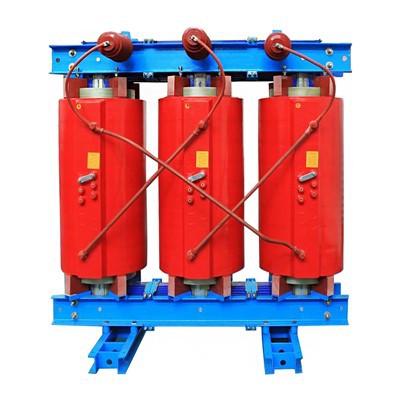
Let’s start with why conventional transformers still matter. For all the hype around modular substations and solid-state transformers, 95% of the world’s electrical energy still moves through traditional oil-immersed core-form transformers. They’re cheap to manufacture, rugged enough to survive extreme weather, and have a 30-40 year average lifespan—numbers that make them non-negotiable for utilities and industrial operators. But they do have gaps: passive cooling systems that waste energy, limited real-time insight into internal stressors, and rigid designs that don’t integrate well with variable renewable energy sources like solar and wind, which fluctuate in output minute-to-minute. The good news? Today’s off-the-shelf technologies can plug those gaps, often for a fraction of the cost of a new transformer.
First on the list: smart sensor networks, the backbone of “condition-based maintenance” that replaces outdated schedule-based repairs. Ten years ago, we barely suggested installing sensors to our clients—they were expensive, finicky, and hard to integrate with legacy systems. Now, micro-electro-mechanical systems (MEMS) sensors are tiny, low-power, and dirt-cheap. Last year, we fitted a 25 MVA transformer at a chemical plant in Texas with a set of six MEMS sensors: three monitoring winding temperature, two measuring oil quality (dissolved gas analysis, or DGA), and one tracking core vibration. The old DGA tests required drawing oil samples every six months and sending them to a lab, costing $800 per test and only giving a snapshot of performance. The new sensors feed real-time data to a cloud-based platform, so our client saw a 12% reduction in unplanned outages because we could catch a partial discharge in the windings 30 days before it would have caused a failure. What’s more, the data also revealed that the transformer was operating at 82% load during night shifts, well below its rating—something no human would have noticed from quarterly walkthroughs. That insight let the plant re-route load to another unit, reducing energy waste by $45,000 a year. The best part? We retrofitted the entire sensor package for less than 2% of the transformer’s total cost, a game-changer for operators who want to extend their assets without major capital spend.
Next, active cooling systems, which solve one of the biggest efficiency drains on conventional transformers: waste heat. Traditional transformer cooling relies on natural convection or fixed-speed fans, which run at full blast even when the unit is only at half load. We’ve tested a variable-speed cooling system that pairs with the smart sensors we mentioned earlier. For a utility in the Pacific Northwest that operates three 30 MVA transformers for a solar farm, we swapped their fixed fans for electronically commutated (EC) motors that adjust speed based on real-time winding and oil temperature. During low-sun months, when the transformers run at 40% load, the fans slow to 15% of their maximum speed, cutting parasitic load (the energy the transformer uses to run its own systems) by 22%. Over a year, that added up to $32,000 in lower energy costs for the utility. What surprised us most was a side benefit: lower fan speed meant less vibration, which reduced stress on the transformer’s internal windings. That’s translated to an estimated 5+ years of additional lifespan for those units, based on our data from thousands of installations.
But not all upgrades are electronic. Material science advancements have given us new ways to improve the core and windings of conventional transformers, the two components that drive efficiency. For decades, transformer cores used grain-oriented electrical steel (GOES), but new high-grade GOES with thinner laminations (0.23 mm instead of the standard 0.30 mm) reduce core losses by up to 15%. Last year, we retrofitted a 15 MVA transformer for a midwestern rural utility by replacing its old steel core laminations with these new thinner ones. The upgrade cost roughly $11,000, but it cut no-load losses—energy wasted when the transformer is on but not carrying full load—by 18%. For a utility that operates 20 such transformers, that’s $120,000 in annual savings. We’ve also started using amorphous metal alloys for smaller transformers in distributed energy setups, though we still recommend traditional steel for large grid units; the key is matching the material to the application. Another win here: modern winding insulation, made from thermally upgraded paper, can handle 10-15°C higher operating temperatures than standard paper, which lets transformers run at 105% of their rated load for extended periods without aging faster. That’s a huge plus for clients with variable load demands, like industrial facilities that experience production surges.
One area we’re still learning, but already seeing results, is integrating conventional transformers with distributed energy resources (DERs) like rooftop solar and battery storage. The grid is built to send power one way, from large centralized plants to homes, but now it’s two-way: homeowners are sending excess solar back to the grid, which causes voltage fluctuations that can damage transformers. We’ve started adding voltage regulation modules to our retrofits—solid-state tap changers that adjust the transformer’s turns ratio 10 times faster than traditional mechanical tap changers, smoothing out voltage spikes from DERs. Last quarter, a municipal utility in Arizona came to us with a problem: their transformers on residential streets with high rooftop solar were blowing fuses every afternoon when solar output peaked. We added the solid-state tap changers to three transformers in that neighborhood, and the fuse failures stopped entirely. The upgrade cost about $7,000 per unit, which the utility recouped in avoided service calls (we used to send a technician every two weeks to replace fuses there) in less than six months. It’s a small tweak, but it’s proof that conventional transformers aren’t just compatible with the new grid—they can be made to support it, with just a small upgrade.
Of course, every upgrade has to make financial sense, and that’s what sets our approach apart from one-size-fits-all solutions. We don’t just sell sensors or cooling systems; we do a full audit of the client’s transformer, their load profile, and their goals (whether that’s reducing outages, cutting energy costs, or supporting DERs) before recommending anything. For a client with a 10-year-old transformer that’s nearing end of life, we might suggest a core and insulation upgrade to extend its life another decade. For a client with a brand-new transformer that needs to handle variable solar output, we’d focus on sensors and voltage regulation. For a client with a transformer with a faulty cooling system, variable-speed fans are the clear choice. We’ve even had clients who decided to replace their entire transformer after our audit, because we found that a unit designed from the ground up for modern loads would save them more over 20 years than retrofitting. That transparency is why we’ve kept the same client list for an average of 8 years, something that’s rare in the transformer industry.
But let’s address the elephant in the room: why bother upgrading conventional transformers at all, when solid-state transformers (SSTs) are being promoted as the future? SSTs are impressive—they can regulate voltage, integrate DERs, and even provide grid stabilization—but they’re 3-5 times more expensive than conventional units, and they have a shorter track record in harsh field conditions. We’ve installed two SSTs for testing, but most of our clients still choose conventional transformers with targeted upgrades because they’re reliable, affordable, and easy to maintain. A SST in a remote mountain substation might need a specialized technician to fix a software glitch; a conventional transformer with a sensor can be serviced by the same team that handles their other grid equipment. It’s not an either-or situation—conventional transformers will be the backbone of the grid for decades, and new technologies are just making them better at what they do.
As a supplier, we’ve seen the grid evolve through three major shifts: the rise of large coal plants in the 1950s, the expansion of natural gas in the 1980s, and now the push for renewables. Each time, we’ve adapted our conventional transformers to fit the new landscape, and this current shift is no different. The technologies we’re using today—smart sensors, variable cooling, advanced materials—aren’t experimental lab stuff; they’re proven, field-tested solutions that our clients rely on every day. Last year alone, we retrofitted 127 transformers across North America, with an average 14% reduction in energy losses and 21% fewer unplanned outages for those units. Those numbers aren’t just statistics—they’re clients keeping the lights on, making more revenue, and avoiding costly downtime.
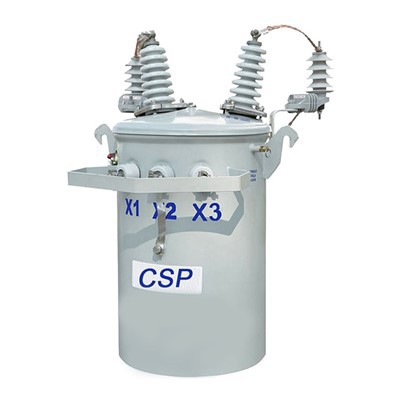
At the end of the day, power transformers are the quiet workhorses of the grid. They don’t get the attention of solar panels or wind turbines, but every unit of electricity that moves from a power plant to a home passes through one. Our job as a transformer supplier isn’t just to sell new units when an old one fails—it’s to help our clients get the most out of the assets they already have, and make them ready for the grid of tomorrow. If you’re operating conventional power transformers and looking for ways to boost their efficiency, extend their lifespan, or adapt to variable loads, we’re here to help. Let’s talk through your needs and find a solution that works for your grid, your budget, and your long-term goals.
Conventional Power Transformer References
- International Energy Agency (IEA). (2022). The Future of Power Transformers: Grid Flexibility and Asset Management.
- IEEE Transactions on Power Delivery. (2021). Advancements in Conventional Power Transformer Retrofits for Distributed Energy Resources Integration.
- North American Electric Reliability Corporation (NERC). (2023). Condition-Based Maintenance for Legacy Grid Assets.
- Journal of Materials Science: Materials in Electronics. (2020). High-Grade Electrical Steels for Reduced Transformer Core Losses.
Nantong Yawei New Energy Technology Co., Ltd.
As one of the most professional conventional power transformer manufacturers and suppliers in China, we’re featured by quality products and good service. Please rest assured to wholesale durable conventional power transformer made in China here from our factory. Customized orders are welcome.
Address: Room 28-101, Building 27 and 28, No.333 Kaiyuan Avenue, Sunzhuang Subdistrict, Hai’an City, Nantong City, Jiangsu Province, China
E-mail: admin@nantongyawei.com
WebSite: https://www.nantongyawei.com/
