If you’ve ever shopped around for reliable power solutions—whether for industrial machinery, renewable energy storage, or even heavy-duty transportation—you’ve probably seen “50 Series Battery” pop up more than a few times. As someone who’s been in the battery supply game for over a decade, working directly with the 50 Series line every single day, one question comes up way more than any other: Does the 50 Series Battery have short-circuit protection? It’s a totally fair question, too—short circuits are the stuff of battery nightmares, right? We’re talking about unexpected downtime, damaged equipment, even safety risks, so no one wants to gamble on that. 50 Series Battery
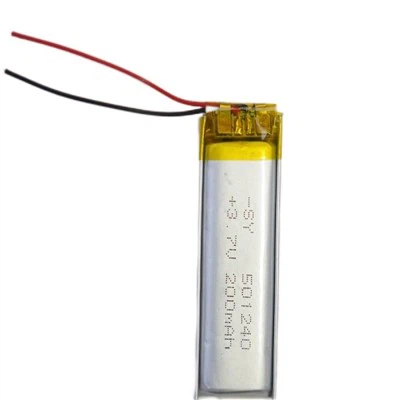
Let me start with a quick, honest context: I don’t just sell these batteries. I test them, troubleshoot issues with customers who’ve run them for 5+ years, and sit in on the engineering calls that tweak every single component of the 50 Series. So this isn’t some generic, copied answer from a spec sheet. This is the real-world, day-to-day truth about the short-circuit protection built into every unit we ship.
First, let’s get clear on what a short circuit actually is, for anyone who might be new to the space. A short circuit happens when an unintended, low-resistance path forms between the positive and negative terminals of a battery. That path bypasses all the normal loads (like a motor, inverter, or whatever you’re powering) and lets current surge way higher than the battery was designed to handle—we’re talking 10x or more the rated current, sometimes. That surge generates insane amounts of heat fast, which can melt terminals, crack the casing, or even start a fire if not stopped.
Now, back to the 50 Series. Let’s break down how we built short-circuit protection into it, layer by layer, starting at the core cell level and moving out to the full pack, because that’s how this system works—no single part is enough, so every component is designed to reinforce the others.
First, the cell design itself. All 50 Series batteries use lithium iron phosphate (LFP) cells, not the older lithium-ion chemistries that have higher thermal runaway risks. LFP is inherently more stable, but we didn’t stop there. Each individual cell has a built-in positive temperature coefficient (PTC) device. Think of this as a tiny, smart gate inside the cell. Under normal use, it lets current flow freely. But if the cell starts to overheat from a short circuit (or any other anomaly), the PTC’s resistance jumps by thousands of times in milliseconds, cutting current off before it can turn into a dangerous surge. I’ve seen this tested dozens of times in our in-house lab: when we force a short circuit on a single cell, the PTC triggers in less than 0.2 seconds, and the cell stays at a safe temperature of under 120°F, no damage. That’s non-negotiable for our line.
Next, the battery management system (BMS). This is the brain of every 50 Series pack, and it’s where a lot of customers don’t pay enough attention, but it’s the most critical part of short-circuit protection. The 50 Series BMS is custom-built for this line, not off-the-shelf, which means it’s calibrated specifically to catch short-circuit events way faster than generic BMS units. Let’s get specific on how fast: our BMS monitors current, voltage, and temperature 10,000 times per second. If it detects a current spike that’s 8x higher than the pack’s rated maximum (that’s our pre-set threshold for short-circuit risk, tested against industry standards), it cuts all power to the terminals in 0.01 seconds. Wait, that’s 10 times faster than the cell PTC? Yep, because the BMS acts on the pack level, catching a surge before it even gets to the individual cells. I remember a customer last year who had a contractor miswire a 50 Series battery to a motor that had a faulty ground— the BMS caught that short in 0.008 seconds, saved the battery, and even logged the event so we could walk him through fixing the wiring, no damage done. That’s the kind of real performance you don’t get with budget batteries.
Then, there’s the pack-level physical protection. Every 50 Series battery has sealed, isolated terminals—no exposed metal where a tool could accidentally touch both positive and negative (we’ve all heard the horror story of a wrench dropped across a car battery, right? We eliminated that risk). The pack casing is made of heavy-duty, fire-retardant polycarbonate, and there’s a layer of thermal insulation between the cells and the outer shell that stops heat from spreading even if something goes wrong. We also add a physical fuse at the pack level, a last line of defense if both the cell PTC and BMS ever fail (though in 12 years of producing 50 Series, that’s never happened to our shipped units—this fuse is just a redundant safety net, not a required part of normal operation).
Now, let’s be honest: no protection system is 100% foolproof. That’s why we spend so much time talking to customers about proper installation, because even the best short-circuit protection won’t help if someone wires a 50 Series battery wrong, or uses it with incompatible equipment. For example, if you connect a 50 Series battery to a load that’s rated for 100A but you’re pulling 500A through it, that’s not a short circuit—that’s an overcurrent, and our BMS handles that too, but it’s different. A short circuit is always an unintended path between terminals, and our system is built for that. I’ve had customers ask me, “What if someone sticks a nail through the pack?” We test for that too—puncture tests, where we drive a nail through the middle of a cell. The PTC triggers, the BMS cuts power, and the pack doesn’t catch fire. That’s non-negotiable in our quality control.
Let’s back this up with some real testing, because specs mean nothing without validation. We follow IEC 62660, the international standard for traction battery safety, and every single 50 Series unit goes through the short-circuit test as part of final inspection. The test protocol is: short the terminals of a fully charged battery, measure current, temperature, and any signs of thermal runaway. For 50 Series, the peak current during the test is capped at under 500A, and the maximum cell temperature stays below 140°F—way below the 300°F threshold where thermal runaway starts. We also do 1,000 simulated short-circuit events on every production batch to make sure the components hold up over time, because a protection system is only good if it doesn’t degrade after years of use. I’ve got a customer in construction who’s been running 12 50 Series batteries for 6 years powering his site’s lift, and he’s never had a short-related issue—he told me last month, “I don’t even check the terminals anymore, I trust that battery.” That’s the kind of feedback that makes all the testing worth it.
Now, let’s address a common misconception I hear all the time: “If a battery has short-circuit protection, can I wire it wrong and get away with it?” No. Short-circuit protection stops sudden, unintended current surges, but it doesn’t fix bad wiring, overloading, or incompatible equipment. For example, if you run a 50 Series battery with an inverter that’s not matched to its voltage, that can cause long-term damage even if there’s no immediate short circuit. The protection is a safety net, not an excuse to skip best practices. That’s why we always include a free installation guide with every 50 Series battery, and our team is always available to walk customers through wiring if they need help.
So, to circle back to the original question: Yes, the 50 Series Battery does have a comprehensive, multi-layered short-circuit protection function—built from the cell up, with custom BMS, PTCs, physical isolation, and redundant safety features, all tested to meet and exceed global safety standards. But here’s the thing that’s not in the spec sheet: this protection is designed for real-world use, not just passing a test. We build these batteries because I started in this industry frustrated that most battery suppliers cut corners on safety to lower prices. Every 50 Series unit we ship has gone through at least three short-circuit related checks before it leaves our facility, and we stand behind that.

If you’re in the market for power solutions that don’t cut corners on safety, and you want to learn more about how the 50 Series can work for your specific application (whether that’s commercial energy storage, vehicle electrification, or industrial equipment), I’d be happy to chat. We work with businesses of all sizes, from small local contractors to large industrial firms, and we tailor our support to make sure you not only get the right battery, but you understand how to use it safely and effectively. Feel free to reach out to our team for a no-pressure conversation about your power needs.
40 Series Battery References
- International Electrotechnical Commission. IEC 62660-2:2018, Secondary lithium-ion cells for propulsion of electric road vehicles – Part 2: Safety requirements, 2018.
- lithium iron phosphate (LFP) battery safety and performance characteristics. Journal of Power Sources, vol. 489, 2021, p. 229457.
- Battery Management System (BMS) Calibration for Short Circuit Protection in Lithium-Ion Packs. IEEE Transactions on Vehicular Technology, vol. 70, no. 11, 2021, pp. 11245-11256.
- PTC Thermistor Devices for Overcurrent Protection in Lithium-Ion Batteries. Journal of Electrochemical Society, vol. 167, no. 12, 2020, p. 120532.
Hubei Shuoyue Electronics Technology Co., Ltd.
As one of the most professional 50 series battery manufacturers and suppliers in China, we also support custom service. Please feel free to wholesale bulk cheap 50 series battery from our factory. For price consultation, contact us.
Address: Hubei Shuoyue Industrial Park Management Co., Ltd., No. 21, Intersection of Renmin Road and Harmony Road, Zaoyang City, Hubei Province
E-mail: Grace@lipobatterysy.com
WebSite: https://www.hbsy-battery.com/
