If you’ve walked through a modern automotive assembly line, a pharmaceutical packaging facility, or even a custom electronics workshop in the last five years, you’ve probably marveled at robots that don’t just repeat the same precise motion over and over—they adapt when a part is slightly off, correct a misaligned component before it causes a delay, and even predict when a part will wear out before it breaks. As an industrial robot supplier that’s worked with factories across North America and Europe for over a decade, I can tell you that none of that flexibility, efficiency, and reliability would be possible without artificial intelligence algorithms. For too long, people have seen industrial robots as nothing more than heavy, pre-programmed arms that do one job and one job only. But AI has turned that outdated view on its head, and it’s redefining what these machines can do to help manufacturers stay competitive. Industrial Robot
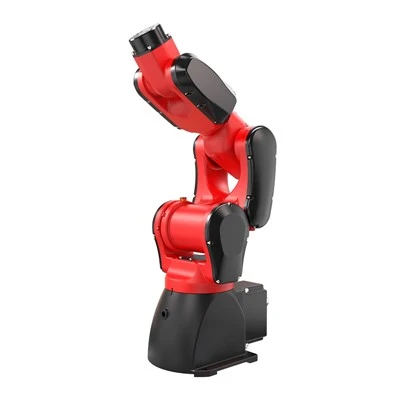
Let’s start with the most visible role AI plays in industrial robots: adaptive motion control. Early industrial robots were programmed with rigid point-to-point paths. If a metal stamping slightly warped between batches, or a conveyor belt shifted by a few millimeters, the robot would either bump into the part, waste time fumbling for the right spot, or stop entirely until a technician manually adjusted its code. AI-powered computer vision changes that. These algorithms process data from high-resolution cameras, LiDAR sensors, and force-torque sensors in real time, so the robot can “see” a part as it’s presented, map its exact position and shape, and adjust its motion on the fly. A client of ours that makes custom agricultural equipment used to spend 12+ hours a week re-programming their welding robots for different-sized frame parts. After integrating AI vision algorithms into their robotic workcells, that time dropped to less than 30 minutes a week. The robots now adjust their weld paths automatically, accounting for every unique frame variation, which cut their rework rate by 22% in just six months. That’s not just a small efficiency gain—that’s the difference between meeting a monthly production quota and falling short.
Beyond motion control, AI algorithms are revolutionizing predictive maintenance for industrial robots themselves—and for the entire manufacturing line they’re part of. Every robot has hundreds of moving parts: gearboxes, motors, belts, and end-of-arm tooling (EOAT). Before AI, maintenance teams relied on a fixed schedule: lubricate the gearbox every 1,000 hours, replace the EOAT gripper every 6 months, regardless of actual condition. This meant either over-maintaining parts (wasting labor and replacement costs) or under-maintaining them, leading to unplanned downtime that can cost a manufacturing facility upwards of $100,000 per hour for high-volume lines. AI changes this by analyzing sensor data from the robot in real time, identifying subtle patterns that signal a part is degrading weeks or even months before it fails. For example, our AI-powered robot monitoring system tracks variations in motor current, vibration levels, and temperature. Last year, a client in the aerospace parts manufacturing sector came to us with a persistent issue: their precision drilling robots were experiencing unexpected bearing failures every 3 months, causing 12 hours of unplanned downtime per incident. We integrated our AI algorithms, which analyzed historical sensor data and flag minor vibration spikes that correlated with early bearing wear. Within 90 days, the client adjusted their maintenance schedule to address the wear before failure, cutting unplanned downtime related to those robots by 98%. That’s millions of dollars in saved production time annually.
Another critical, often overlooked role of AI in industrial robots is quality control. For decades, quality inspection was a separate, manual step in the production process. Teams of line workers or automated sensors would check parts after they were assembled, and any defective items would be discarded or reworked. But with AI-integrated robots, inspection is done in-line, as the robot handles the part, catching defects that even high-end camera systems miss. AI algorithms are trained on thousands of images of defective and non-defective parts, so they can identify tiny flaws—like a micro-crack in a plastic component, a misprint on a circuit board, or inconsistent paint thickness—that human inspectors or traditional rule-based vision systems can’t detect. A medical device client we work with produces implantable components, where even a 0.1mm defect can lead to catastrophic failures. Before using our AI-powered robotic inspection workcells, their manual inspection process had a 5% miss rate for small surface defects. After integrating the AI algorithms, that miss rate dropped to less than 0.1%, and they were able to eliminate a separate dedicated inspection line, freeing up 800 square feet of floor space for additional production capacity. For regulated industries like medical devices or aerospace, this isn’t just about efficiency—it’s about compliance and safety.
AI is also breaking down barriers to entry for small and medium-sized manufacturers (SMMs), which have long been priced out of using industrial robots due to their complexity. Traditional industrial robots require specialized programmers to write code, test paths, and adjust settings—jobs that can cost $100+ per hour, and take days to complete for even a simple workcell. AI-powered programming tools change that by using natural language processing and generative AI to let non-technical users set up a robot. A plant manager can say, “I need this robot to pick up plastic bottles from this conveyor, cap them, and place them in a box,” and the AI algorithm will generate the full motion path, adjust for conveyor speed, and test for collisions in minutes, not days. We saw this first-hand with a 20-person food packaging company that previously used manual labor for their seasonal holiday packaging runs. They couldn’t justify the cost of programming a traditional robot for a job that only ran 3 months a year. After using our AI-powered setup tool, they programmed a robotic packing workcell in less than 2 hours, and the robot adjusted its parameters automatically when they switched from 12oz to 16oz bottles that season. They now use the robot for their annual peak season, and their labor costs for that period dropped by 40% while their throughput increased by 30%. This is huge because SMMs make up over 50% of global manufacturing employment, and giving them access to flexible, easy-to-use robotic systems is critical for keeping manufacturing jobs from moving overseas.
Of course, no technology comes without challenges, and AI in industrial robots is no exception. The biggest barrier we hear from clients is data quality: AI algorithms are only as good as the data they’re trained on. If you feed a model with partial or inaccurate data, it will make bad decisions, leading to errors or downtime. Another challenge is cybersecurity: industrial robots connected to AI systems and factory networks are vulnerable to hacking, which can disrupt production or even cause physical damage. That’s why as a supplier, we prioritize building AI systems that are trained on real, factory-specific data, not generic datasets, and that have robust security protocols to protect sensitive production data. We also work closely with our clients to provide ongoing training and support, because even the most advanced AI is only effective if the people using it understand how to interpret its outputs and adjust when needed.
Looking ahead, the role of AI in industrial robots will only grow as manufacturers face new pressures: rising labor costs, demand for more customized products, and the need to reduce their carbon footprint. AI-powered robots can optimize energy use by adjusting motion paths to use less power, reduce waste by catching defects early, and support flexible production lines that can switch between products quickly without major retooling. We recently worked with a automotive client that wanted to produce both gas-powered and electric vehicle parts on the same line, a goal that would have been impossible with traditional pre-programmed robots. Our AI-powered robotic workcells can identify whether a part is for a gas or electric vehicle, adjust their tooling and motion paths automatically, and switch between jobs in under a minute. That kind of flexibility is exactly what will allow manufacturers to meet consumer demand for more customized products, without sacrificing efficiency or cost.
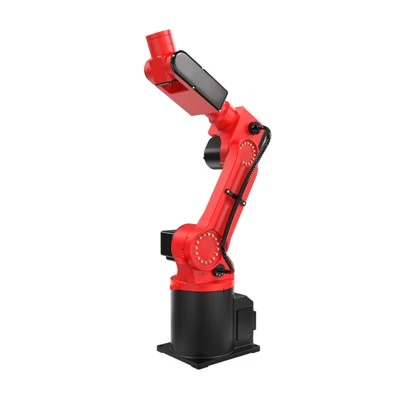
At the end of the day, industrial robots are more than just tools to automate repetitive tasks—they’re core assets that drive a factory’s productivity, quality, and competitiveness. AI is the technology that turns these rigid, one-purpose machines into adaptive, intelligent systems that can grow and change with a business. For over a decade, our team has partnered with manufacturers of all sizes to integrate AI-powered industrial robots into their operations, and we’ve seen first-hand how this technology can transform a facility from struggling to meet quotas to leading its industry in efficiency and quality. If you’re a manufacturer looking to improve productivity, reduce downtime, or tackle the challenges of custom production, we’d welcome the chance to discuss how our AI-integrated industrial robots can support your goals. For more information and to schedule a procurement consultation, please reach out to our team.
Welding Robot References:
- International Federation of Robotics. (2023). Global Industrial Robot Report.
- Lee, J., Bagheri, B., & Kao, H. A. (2015). A Cyber-Physical Systems architecture for Industry 4.0-based manufacturing systems. Manufacturing Letters, 3, 18-23.
- Vasconez, J. P., Kantor, G. A., & Garcia, F. (2019). Computer vision for industrial robotic applications: A survey. IEEE Transactions on Robotics, 35(2), 289-309.
- Zhang, Y., et al. (2022). Predictive maintenance for industrial robots using sensor data and machine learning algorithms. Journal of Manufacturing Systems, 63, 452-465.
Robotic Technology (GD) Co., Ltd.
Robotic Technology (GD) Co., Ltd. is one of the most experienced industrial robot manufacturers and suppliers in China, also supports custom service and one year warranty. Please feel free to wholesale CE approved industrial robot for sale here from our factory. Contact us for quotation.
Address: Room 102, No. 30,Hengfeng 2nd Road,Daguo, Changping Town, Dongguan City,Guangdong,China
E-mail: admin@iroboticplus.com
WebSite: https://www.rb-tic.com/
