Let me start by saying, if you’re still running separate turning and milling machines in your shop, you’re almost definitely leaving productivity on the table. As a turn-mill machine supplier who’s talked to hundreds of small to mid-sized manufacturing owners over the last five years, I’ve seen firsthand the headaches that come with bouncing between two machines, re-clamping parts, and waiting for tools. Let’s break down the real, measurable productivity gains of switching to a turn-mill setup vs. the old separate machine way—no fluff, just what actually moves the needle. Turn‑Mill Machine Machine
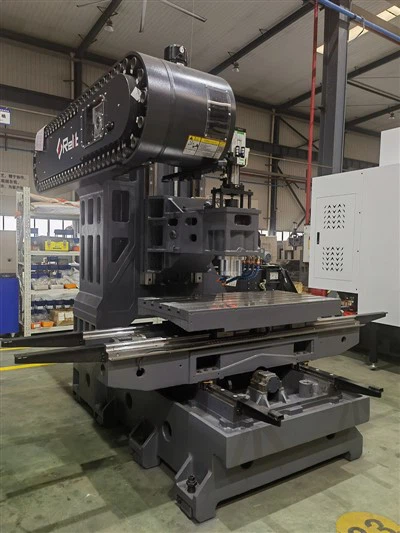
First, let’s cut to the big one: setup time. I get it—separate turning machines (lathes) and milling machines each have their own job, so you figure you just load a part on the lathe, run turning ops, then move it over to the mill for slots, holes, or contours. But here’s the thing: every time you re-clamp a part, you’re not just wasting minutes. You’re risking misalignment, too. A typical aerospace or automotive component might need 3 to 4 total re-clamps across both machines. Each re-clamp takes, on average, 20 to 30 minutes—you have to align the vise, zero the tools, verify coordinates, fix any small misalignment issues that pop up. Multiply that by 3 or 4 parts per batch, and that’s 1 to 2 hours of setup time per batch, just for re-clamping.
Turn-mill machines do all of that in one single setup. The machine’s built to handle both turning (rotating the part) and milling (using a tool head that moves in X, Y, Z axes) without ever touching the part again. I had a client last year—a custom medical parts shop—who went from a 12-hour setup for a batch of 50 hip implant stems (split across 3 lathes and 2 mills) to a 90-minute total setup on a single turn-mill. That’s not a small win; that’s cutting setup time by 87.5% right there. And setup time is overhead—less of it means you can run more batches, fill more orders, without adding more equipment or labor.
Next, cycle time, which is the time it takes to actually machine a part once it’s set up. This is where a lot of people get tripped up: they think “well, a lathe does turning, a mill does milling—so they’re both already fast.” But turn-mill machines eliminate a lot of the idle time that happens when you move parts between machines. Let’s use a simple example: a small aluminum bracket that needs turning a diameter, then drilling 4 holes, then milling a notch. On separate machines, here’s the flow: load bracket on lathe → turn diameter (10 min) → unload bracket → move to mill → load on mill → drill holes (8 min) → mill notch (7 min) → unload. Total cycle time: 25 minutes.
On a turn-mill, you load the bracket once, and the machine does everything. First, it spins the part for turning (10 min) without unloading. Then, it switches to the milling tool head, adjusts the axes, and drills the holes and mills the notch—all while the part stays clamped. Total cycle time: 12 minutes. That’s a 52% cut in cycle time. And for more complex parts—like a diesel engine component that needs angular milling, thread cutting, and turning operations—the gap gets even bigger. I’ve seen turn-mill cycle times that are 60% to 70% faster than separate machines for parts with 4+ operations.
Wait, but what about tool change time? Some might say “lathes and mills have their own tools, so turn-mills don’t save there.” Not so fast. Turn-mills have dual tool turrets (or sometimes two separate turrets) that can hold both turning tools and milling tools. So instead of stopping a job to swap a drill out for a turning insert on a mill, or swapping a lathe’s insert for a tap, you can switch tools in the background while the machine is still running another operation. For example, if your turn-mill is running turning on one turret, the other turret can be pre-loaded with a milling tool, so when it’s time to switch, it just swaps in 2 seconds—no stops to load tools mid-job. On separate machines, tool changes take 2 to 5 minutes each, multiplied by 3 or 4 tool changes per part. That adds up. A client in the defense parts space told me their tool change time per part went from 8 minutes on separate machines to 1 minute on a turn-mill, which added another 10% to their overall output.
Another big one: work-in-progress (WIP) inventory. Most shops I work with have WIP stacking up between their lathe bay and mill bay. Parts are sitting on pallets waiting to be moved, waiting for a machine to free up, waiting for inspection before moving on. That WIP ties up cash—you’re paying for materials, labor, and floor space for parts that aren’t finished yet. With turn-mill machines, there’s almost no WIP between operations. A single turn-mill can run an entire part start to finish, so parts go from raw material to finished in one step. I had a small automotive parts shop that reduced their WIP stock by 60% after switching—they used to have $150k in half-finished parts between the two machine bays, and that dropped to $60k. That’s cash they can put into new tools, raises, or expanding their business instead of sitting on unused inventory.
But it’s not just about time and inventory—accuracy matters too, especially for tight-tolerance parts. When you re-clamp a part between machines, you get what’s called “positioning error”—even the best operators can get a 0.005-inch (or more) shift when moving a part from a lathe’s chuck to a mill’s vise. For parts that need tolerances under 0.001 inches, that error means scrap parts or rework. Turn-mills eliminate re-clamping, so the entire operation is done from one zero point. A medical device client told me their scrap rate for complex bone screws went from 8% on separate machines to 1% on their turn-mill. That’s not just less waste—it’s more parts shipped on time, no rework delays.
Wait, let’s address the “but turn-mills are expensive” question, because I get that a lot. Yeah, a turn-mill has a higher upfront cost than a single lathe or mill. But the productivity gains almost always pay for themselves in 12 to 18 months, usually less. Let’s do the math: if you’re running two separate machines, you might need one operator for each machine—so two labor hours per batch. A turn-mill can be run by one operator for multiple machines, so you cut labor costs by 50% right there. Plus, the faster cycle times mean you can take on more orders without buying more equipment. A client that makes custom industrial valves told me they spent $120k on a turn-mill, but within 16 months, they’d added $180k in new revenue because they could fulfill orders they used to have to turn down due to machine capacity.
I’ve heard people say “turn-mills are only for big parts or complex parts” but that’s not true anymore. We have turn-mill machines that work for parts as small as a watch component up to large industrial shafts. Even simple parts that only need a few turning and milling ops get the productivity boost—you just don’t notice it as much as with complex parts.
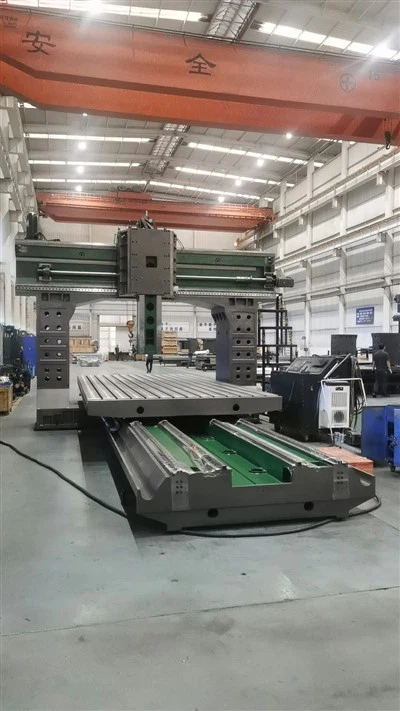
Let’s wrap this up: the real productivity improvements aren’t just “faster” or “less setup time” — they’re compounded. Less setup time means more runs, faster cycle time means more parts per hour, less WIP means less tied-up cash, less rework means fewer scrap parts. All of that adds up to higher output, lower costs, and more capacity.
Box Way Turning Machine Center If you’re still on separate lathes and mills and wondering if a turn-mill is right for your shop, let’s chat. I can walk you through your current workflow, calculate your specific setup and cycle time losses, and show you how a turn-mill fits your budget and production needs. No sales pitches, just straight numbers that make sense for your business.
References
- Manufacturing Engineering and Technology, Kalpakjian, S., Schmid, S.R.
- “Productivity Gains from Multi-Tasking Machine Tools,” Society of Manufacturing Engineers (SME), 2022
- “Turn-Mill Machine Capabilities for Small to Mid-Sized Manufacturers,” Modern Machine Shop, 2021
Smartech Machinery & Equipment Co., Ltd.
As one of the most professional turn‑mill machine machine manufacturers and suppliers in China, we also support customized service. Please rest assured to buy bulk turn‑mill machine machine made in China here from our factory. Contact us for more details.
Address: Room 2832, Changping Commercial Mansion, Shihua Road, Futian Free Trade Zone, Shenzhen, China
E-mail: smartech@smartechcnc.cn
WebSite: https://www.smartech-cnc.com/
