Hey there! As a supplier of isolating switches, I’ve had my fair share of questions about these nifty devices. One of the most common inquiries I get is about the thermal properties of an isolating switch. So, let’s dive right in and explore what makes these switches tick when it comes to heat. Isolating Switch
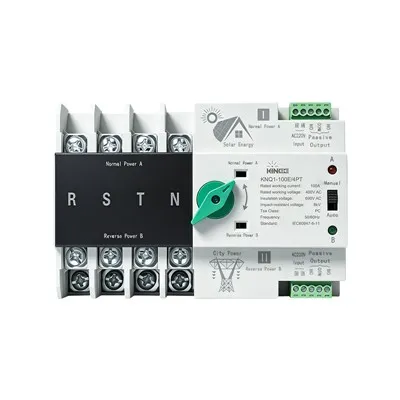
First off, let’s talk about why thermal properties are such a big deal. In any electrical system, heat is a natural by – product of current flow. If an isolating switch can’t handle the heat properly, it can lead to all sorts of problems, like reduced performance, premature wear and tear, and in the worst – case scenario, even a fire hazard.
One of the key thermal properties of an isolating switch is its thermal resistance. This is a measure of how well the switch resists the flow of heat. A good isolating switch should have a relatively high thermal resistance. Why? Well, when current passes through the switch, heat is generated. If the switch has a high thermal resistance, it means that less heat will be transferred to the surrounding environment. This helps to keep the switch cool and ensures that it can operate safely and efficiently.
Another important thermal property is the switch’s ability to dissipate heat. Even with high thermal resistance, some heat will still be generated. That’s where heat dissipation comes in. An isolating switch needs to be able to get rid of the heat it generates. This is usually done through conduction, convection, and radiation.
Conduction is the transfer of heat through a solid material. In an isolating switch, the metal components play a crucial role in conducting heat away from the areas where it’s generated. For example, the contacts of the switch are made of materials that are good conductors of heat. This allows the heat to move from the contact points to other parts of the switch where it can be dissipated.
Convection is the transfer of heat through a fluid, like air. Many isolating switches are designed with fins or other features that increase the surface area exposed to the air. This helps to improve the convective heat transfer. As the air around the switch heats up, it rises, and cooler air moves in to take its place. This continuous flow of air helps to carry the heat away from the switch.
Radiation is the transfer of heat in the form of electromagnetic waves. While it may not be as significant as conduction and convection in most isolating switches, it still plays a role. The surface finish of the switch can affect its ability to radiate heat. A switch with a dark, matte finish will generally radiate heat more effectively than one with a shiny, reflective surface.
Now, let’s talk about how these thermal properties impact the performance of an isolating switch. When a switch is operating at high currents, the heat generated can cause the temperature of the switch to rise. If the switch can’t handle the heat, the contacts may start to degrade. This can lead to increased resistance, which in turn generates even more heat. It’s a vicious cycle that can ultimately lead to the failure of the switch.
On the other hand, a well – designed isolating switch with good thermal properties can handle high currents without overheating. This means that it can operate reliably for a long time, even under demanding conditions. For example, in industrial applications where large amounts of power are being switched on and off, an isolating switch with excellent thermal properties is essential.
As a supplier, I’ve seen firsthand the importance of these thermal properties. We work hard to ensure that our isolating switches are designed and manufactured to meet the highest standards when it comes to heat management. We use high – quality materials that have good thermal conductivity and resistance. Our switches are also designed with features that enhance heat dissipation, like the fins I mentioned earlier.
But it’s not just about the design. We also conduct rigorous testing to make sure that our switches can handle the heat. We test them under different conditions, including high currents and high ambient temperatures. This allows us to identify any potential issues and make improvements before the switches are sent out to our customers.
So, if you’re in the market for an isolating switch, don’t overlook the thermal properties. It’s not just a technical detail; it can have a huge impact on the performance and reliability of your electrical system. Whether you’re working on a small residential project or a large industrial installation, choosing a switch with good thermal properties is crucial.
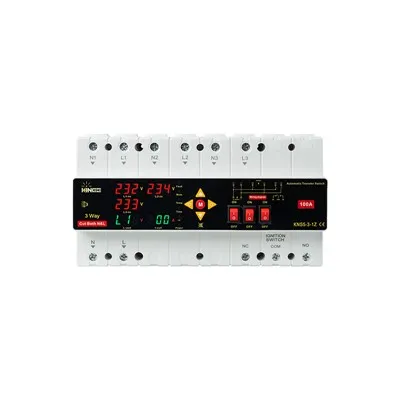
If you’re interested in learning more about our isolating switches or have any questions about their thermal properties, don’t hesitate to reach out. We’re always happy to have a chat and help you find the right switch for your needs. Let’s work together to ensure that your electrical system runs smoothly and safely.
DC MCCB References
- Electrical Engineering Handbook, various editions
- Textbooks on power systems and electrical equipment design
Wenzhou Kinee Electrical Co., Ltd.
We are one of the most professional isolating switch manufacturers and suppliers in China, featured by quality products and good price. Please rest assured to buy advanced isolating switch made in China here from our factory. We also accept customized orders.
Address: Unit 1, Building 31, Wenzhou Wenbo Science and Technology Industrial Park, No. 706 Yanyun Road, Lingkun Street, Oujiangkou Industrial Cluster Area, Wenzhou, Zhejiang Province
E-mail: sandyma@kinee.net
WebSite: https://www.kinee.net/
